



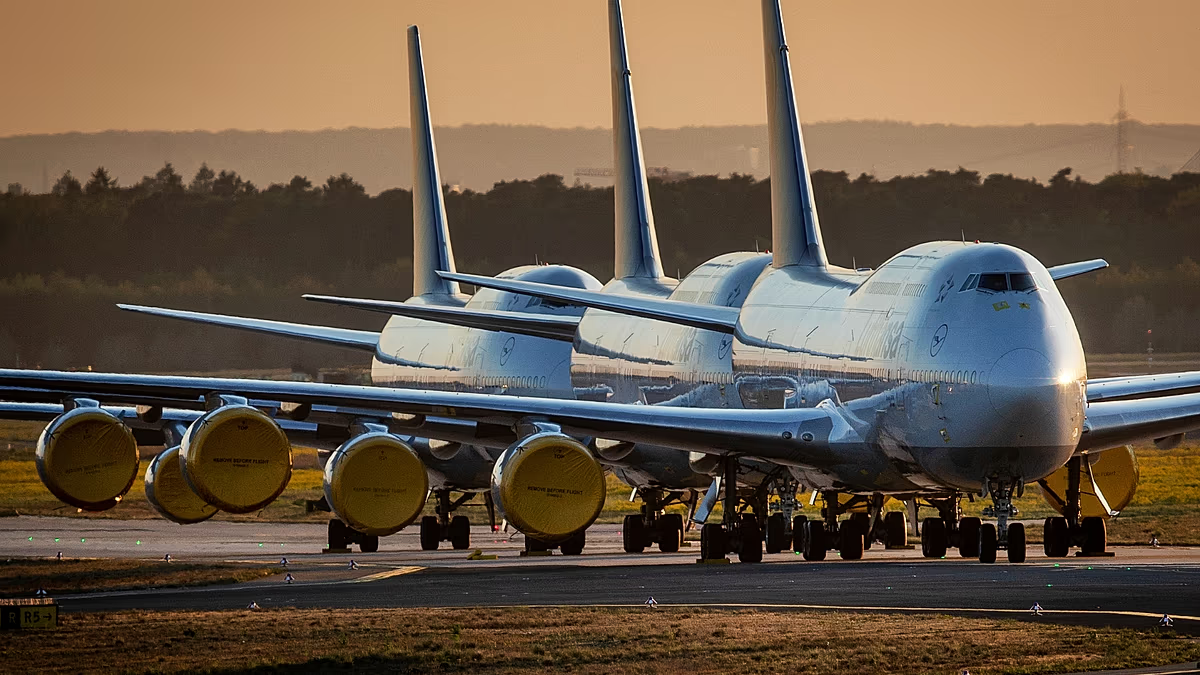
The global airline industry is entering a period of significant paradox, as captured in the latest annual forecast from the International Air Transport Association (IATA). On the surface, the outlook appears robust: a record-breaking 5.1 billion passengers are expected to take to the skies in 2026, a 2.4% increase from the previous year. This strong demand will propel total industry revenues to an all-time high of $1.165 trillion. Beneath these impressive headlines, however, a starkly different financial reality is taking shape. The trade body, representing the vast majority of the world’s airlines, projects that net profits will be nearly halved, plummeting to just $23 billion from an estimated $45 billion in 2025. This dramatic squeeze reveals an industry caught between thriving consumer appetite and soaring operational costs that threaten to erode its hard-won financial stability.
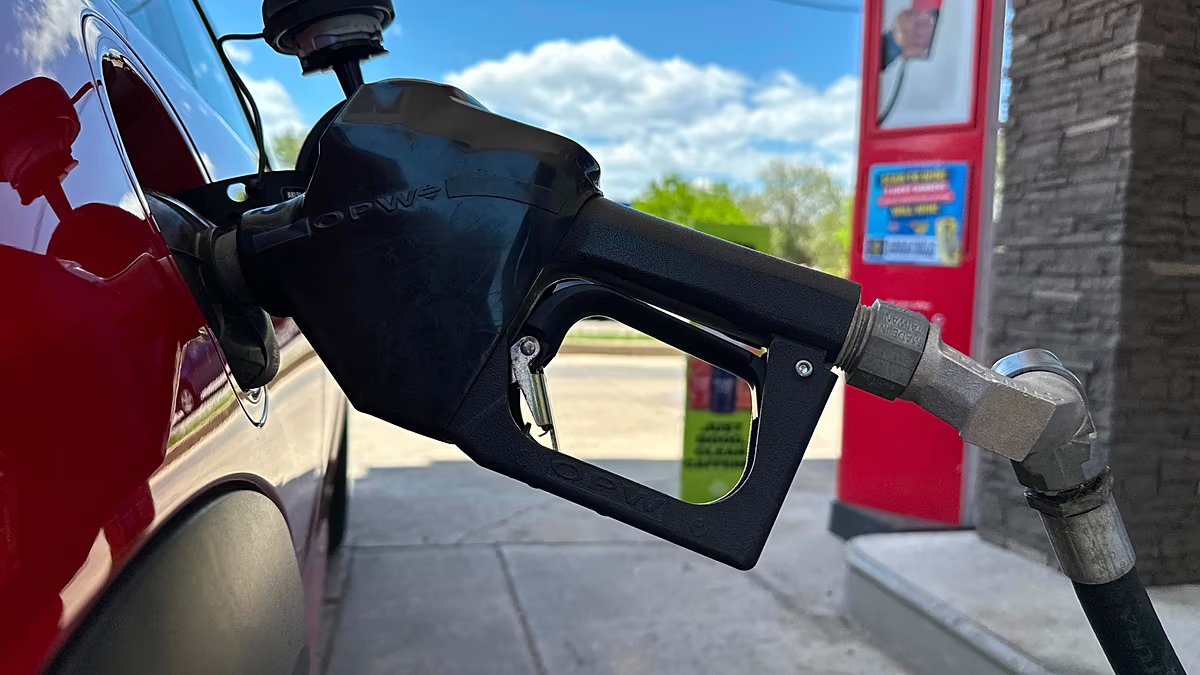
The primary culprit behind this profit plunge is the skyrocketing price of jet fuel, the lifeblood of aviation. IATA’s analysis paints a sobering picture: the industry’s global fuel bill is forecast to surge by nearly 40% in 2026, reaching a staggering $350 billion. This single expense is expected to consume almost one-third of all airline operating costs. Willie Walsh, IATA’s Director General, explicitly links this worsening outlook to geopolitical instability, noting that “war-related disruptions in the Middle East and rising fuel costs have worsened the outlook for airlines.” While airlines have been forced to pass some of these costs onto consumers through higher airfares, they are still absorbing a significant portion of the increase, severely compressing their profit margins. The collective net profit margin for the sector is expected to shrink from a modest 4.2% to a wafer-thin 2.0%.
The human impact of this financial squeeze becomes starkly clear when measured per passenger. Walsh highlighted that the average net profit per traveler is expected to fall to just $4.50 in 2026—half of what it was the year before. To put this microscopic margin into perspective, he wryly noted that this sum “won’t even buy you a hot dog at most FIFA World Cup venues.” This razor-thin buffer leaves carriers extraordinarily vulnerable. Should other costs rise or new taxes be introduced, airlines have very little financial cushion to cope, potentially jeopardizing services and future investments. The fuel crisis is compounded by other rising expenses, including higher aircraft leasing and maintenance costs, alongside necessary but costly investments in sustainable aviation fuels and carbon offsetting schemes.
The financial pain is not being felt equally across the globe, with the regional picture being highly uneven. The carriers facing the most immediate and severe impact are those in the Gulf region, which find themselves at the epicenter of ongoing conflicts. IATA forecasts that these airlines, once symbols of booming global connectivity, are expected to slip into loss-making territory due to a combination of weaker demand and severe operational disruptions. All other regions are projected to remain profitable, but at significantly reduced levels compared to 2025. This regional disparity underscores how global instability can directly and disproportionately reshape the aviation map, punishing some hubs while leaving others to manage a milder, though still challenging, economic headwind.
European airlines, for instance, are bracing for significant cost pressures despite avoiding the direct operational chaos affecting the Gulf. The continent’s heavy reliance on jet fuel imports from that very region makes it acutely sensitive to price spikes and supply chain volatility. While many European carriers have used fuel hedging strategies to mitigate some of the immediate shock—covering around 70% of their needs—these financial safeguards are temporary. As these hedges expire, the full force of higher costs will hit their balance sheets. The region has seen some benefit from travelers choosing direct routes between Europe and Asia, bypassing disrupted Gulf hubs, but this is a minor silver lining. Airlines there continue to grapple with the persistent operational headaches and longer flight times caused by airspace restrictions over Russia, alongside the broader pressures of slower economic growth and rising household energy bills that may dampen consumer spending on travel.
Looking ahead, the industry’s path is fraught with additional challenges beyond fuel. Airlines in Europe and elsewhere face mounting costs from stringent environmental regulations, increasing airport charges, and rising air traffic control fees. In several European countries, recurring industrial action adds another layer of operational uncertainty and expense. This confluence of pressures risks leaving some carriers at a sustained competitive disadvantage, even after fuel markets eventually stabilize. The IATA report serves as a clear warning: the aviation industry’s recovery in passenger numbers is complete, but its journey toward sustainable financial health is now entering a much more turbulent phase. The record crowds at airports mask a fragile economic reality where airlines are flying more people than ever before for shockingly little profit, navigating a complex web of geopolitical, economic, and environmental pressures that will define their future.