



A Gathering Storm in the Pacific: Navigating Economic Headwinds with Resilience
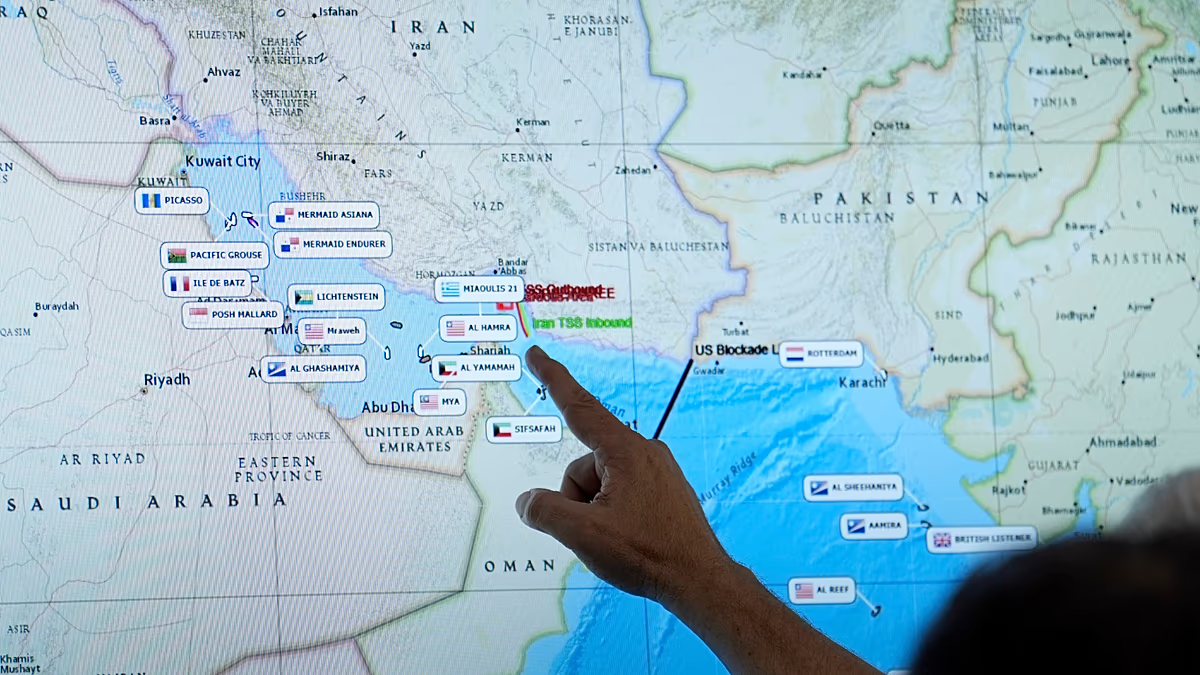
The sunny economic outlook for the Pacific region is clouding over, according to a sobering new assessment from the Asian Development Bank (ADB). After a period of relatively robust expansion, growth is forecast to slow significantly, from 4.2% in 2025 to just 2.8% in 2026. The bank cautions that a combination of worsening global conditions could even drag growth as low as 2.0%. This downturn isn’t an abstract statistic; it represents a tangible threat to livelihoods and stability across the vast expanse of island nations. The primary culprit, the ADB notes, is the ripple effect of geopolitical instability, particularly energy supply disruptions stemming from the ongoing conflict in the Middle East. For communities thousands of miles away, distant tensions are translating into immediate economic anxiety, setting the stage for a challenging period ahead.
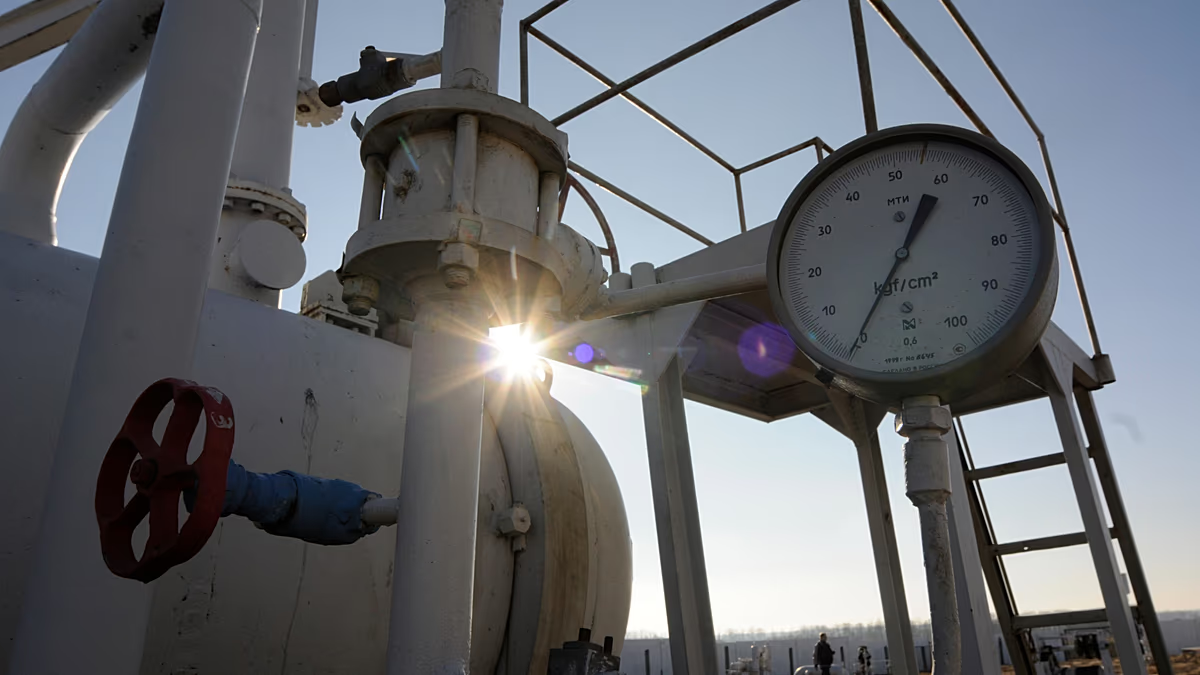
For the small, isolated island nations of the Pacific, this global turbulence poses an existential threat. These economies are uniquely exposed to external shocks, with limited capacity to absorb blows from volatile international markets. A stark example is Tonga, which spends a staggering 10% of its entire national economic output—its GDP—just on importing fossil fuels. When global oil prices spike due to conflict, the impact on such a nation is immediate and severe, draining resources from healthcare, education, and infrastructure. ADB President Masato Kanda acknowledged this acute vulnerability, telling Euronews that the bank is already receiving requests for support and is preparing to move swiftly. “We stand ready to help Pacific countries build resilience,” Kanda said, emphasizing that assistance must look “beyond immediate needs” toward lasting solutions, starting with the critical task of diversifying energy sources away from costly, unreliable imports.
Recognizing that a crisis cannot be solved with short-term fixes alone, the ADB is doubling down on long-term investments designed to forge greater energy independence. The strategy is to turn vulnerability into strength by harnessing the region’s abundant natural resources. Kanda highlighted transformative projects like the Tina River Hydropower Project in the Solomon Islands. Once completed in 2028, this initiative is expected to generate about 70% of the nation’s electricity, a monumental leap toward sustainability. Beyond big-ticket projects, the bank is supporting the quieter revolution of battery and energy storage systems across several economies. These technologies are key to building stable, modern grids that can effectively use solar, wind, and hydropower, reducing the crippling dependence on shipped-in diesel fuel. “This could help economies become more resilient over the long term,” Kanda explained, painting a picture of a future where power is cleaner, cheaper, and homegrown.
The region’s challenges, however, extend far beyond the power socket. A second, parallel crisis is brewing in its farms and food systems. The ADB warns that developing economies across Asia remain dangerously exposed to soaring fertiliser prices, which directly threaten food security and agricultural production. For most subregions, over 60% of fertiliser consumption depends on imports, leaving them hostage to global market swings. South Asia is most exposed, with 34% of its fertiliser imports coming from the Middle East, followed by Central and West Asia at 24%. The nations at greatest risk are low-income economies with large agricultural sectors; they face a perilous double bind of relying on imported inputs while being most vulnerable to shocks in local food production. This creates a scenario where a geopolitical event can simultaneously make energy unaffordable and farming untenable, squeezing households from both sides.
In response to this multifaceted crisis, the ADB is deploying a full spectrum of financial tools and advocating for deeper regional cooperation. The approach is two-pronged: emergency intervention to stem immediate bleeding, and medium-term programs to rebuild stronger. “We use our trade and supply chain financing for immediate short-term needs,” said President Kanda, describing a financial first-aid kit for strained economies. “We also provide rapid budget support to protect vulnerable populations and deploy medium-term resilience tools to stabilise economies.” The scope of the problem is undeniably global, affecting economies from the Pacific to Central Asia. Japanese Finance Minister Satsuki Katayama underscored this interconnectedness, noting that while impacts are uneven—energy-producing regions in Central Asia may feel less pressure—”the entire world is being affected.” She stressed that the path forward requires unprecedented collaboration on supply chain diversification and the clean energy transition, a slow but necessary journey where “there is a shared sense that we are moving in the same direction.”
Ultimately, the economic fate of the Pacific and wider Asia in the coming years hinges on adaptation. With energy and food markets expected to remain under persistent pressure, the ADB’s outlook suggests that resilience will be the defining characteristic of successful nations. The forecast is not one of inevitable decline, but a call to strategic action. The coming period will test how effectively governments, supported by institutions like the ADB and through strengthened regional ties, can navigate continued supply disruptions. The goal is clear: to transform today’s external shocks into the catalyst for building more independent, diversified, and sustainable economies. The storm clouds are gathering, but through targeted investment, cooperation, and a steadfast commitment to a cleaner, more self-sufficient future, the Pacific can chart a course through the turbulence toward calmer seas.