

Over the past several years, a profound and painful energy crisis has fundamentally reshaped Europe’s understanding of its own security. The bloc’s longstanding and deep reliance on foreign partners, particularly for fossil fuels, was thrust into stark relief, exposing vulnerabilities that transcended economics and touched the very core of strategic autonomy. This collective shock has acted as a powerful catalyst, forcing the European Union into a historic and urgent pivot. The bloc is now relentlessly pursuing energy independence, not through a single, simple solution, but through a comprehensive and diversified strategy designed to future-proof its economy and stabilize its political footing in an increasingly turbulent world. This journey is one of reinvention, moving from a position of dependence to one of resilience and innovation.
This transformation is already visible in Europe’s power grids. Renewable energy sources, particularly wind and solar, have moved from the periphery to the very backbone of the electricity system. In a symbolic milestone reached in 2025, these technologies together generated a record 30% of the EU’s total electricity, finally eclipsing the 29% share held by fossil fuel generation. This is more than a statistical victory; it represents the tangible outcome of massive investment, policy support, and societal commitment to a cleaner future. The transition, however, is not without its challenges, including managing the intermittent nature of these power sources and upgrading infrastructure. Yet, the direction is unmistakable: Europe is betting its future on harnessing the power of its own winds and sunlight.
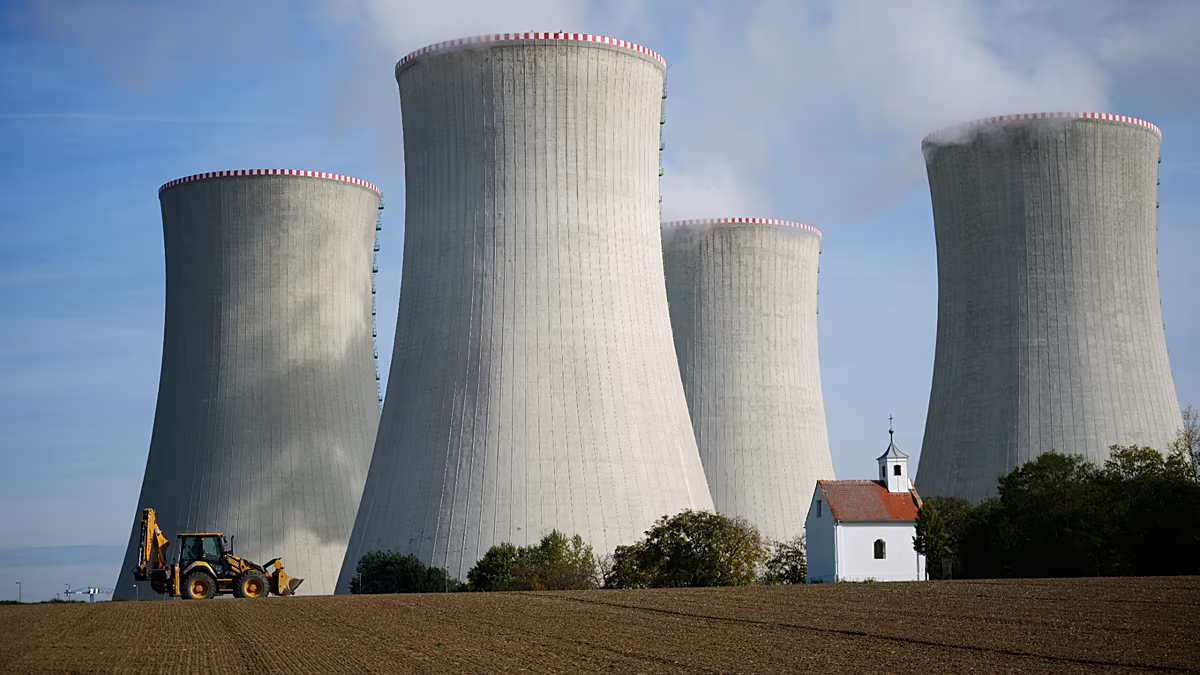
Alongside this renewable surge, Europe is engaging in a nuanced re-evaluation of a more established power source: nuclear energy. Providing roughly a quarter of the bloc’s electricity, nuclear offers the distinct advantage of reliable, low-carbon baseload power. To modernize this fleet and adapt to new needs, the EU has placed a strategic bet on next-generation technology, specifically Small Modular Reactors (SMRs). These reactors promise enhanced safety, lower upfront costs, and greater flexibility. With a strategy aiming to bring the first SMRs online by the early 2030s and a commitment of hundreds of millions of euros to accelerate nuclear and fusion research as of early 2026, the EU signals that a diverse clean energy portfolio must include both innovative renewables and advanced nuclear power.
The diversification effort extends beyond electricity generation to the very fuels that heat homes and power industry. In a decisive geopolitical move, the EU instituted a complete ban on all Russian gas and liquefied natural gas (LNG) imports in January 2026. This bold step required a rapid and complex restructuring of supply chains. The gap has been filled by a concerted turn to global LNG markets, securing supplies from a variety of international partners, and a parallel push to increase domestic production of biomethane. Furthermore, looking toward a decarbonized industrial future, the bloc is championing green hydrogen—produced using renewable electricity—as a central pillar. The coordination of this ambitious hydrogen market through the EU Energy and Raw Materials Platform underscores a commitment to creating a new, homegrown energy carrier.
The question now facing European citizens, policymakers, and industries is not whether to diversify, but how to best balance this complex new energy mix. Should the staggering momentum behind wind and solar be the unequivocal priority, given their rapidly falling costs? Or does the pressing need for grid stability and industrial heat make advanced nuclear or green hydrogen the more critical investment? There are no simple answers, as each path involves trade-offs in cost, timing, infrastructure, and environmental impact. The choices made will resonate for decades, influencing everything from household utility bills to the global competitiveness of European manufacturing.
Ultimately, Europe’s energy journey is a testament to its capacity for adaptation in the face of crisis. By weaving together a robust tapestry of renewable sources, next-generation nuclear technology, alternative gases, and a visionary hydrogen strategy, the EU is building a system designed for resilience. The goal is no longer merely to secure energy from abroad, but to innovate and produce it at home. This multifaceted approach, while challenging to orchestrate, is Europe’s chosen pathway to reclaiming its energy sovereignty, meeting its climate ambitions, and securing a stable foundation for its future, including powering the transformative age of artificial intelligence. The success of this great re-powering of a continent will depend on sustained investment, societal consensus, and strategic clarity in the years to come.