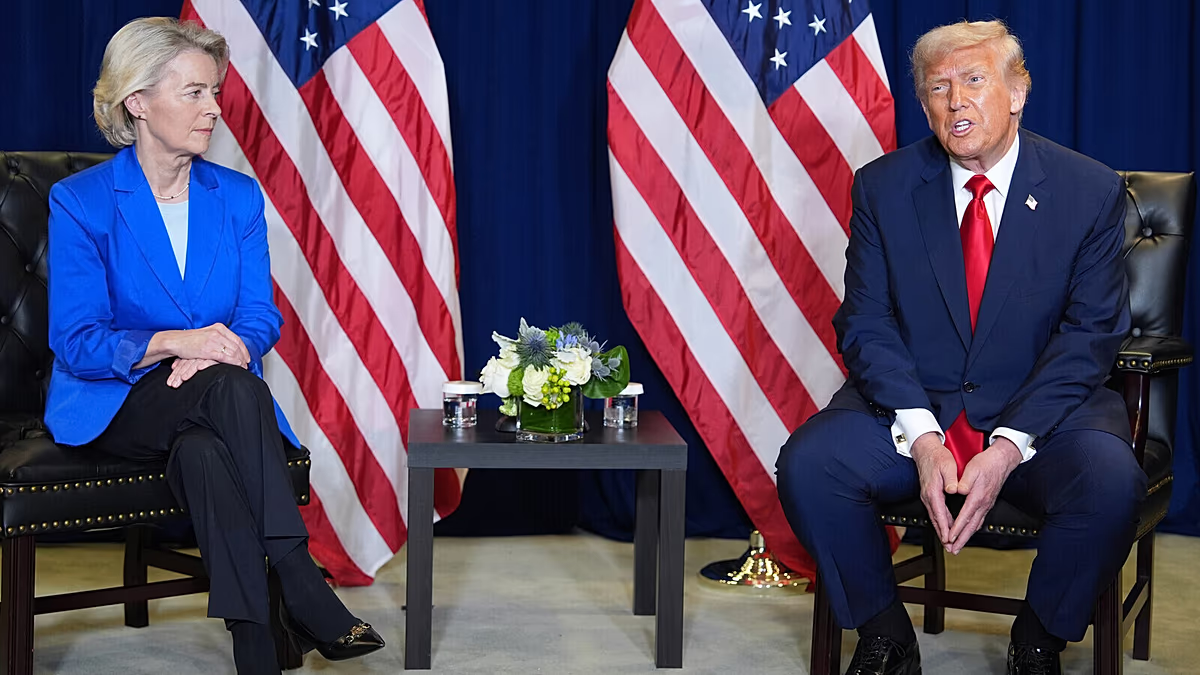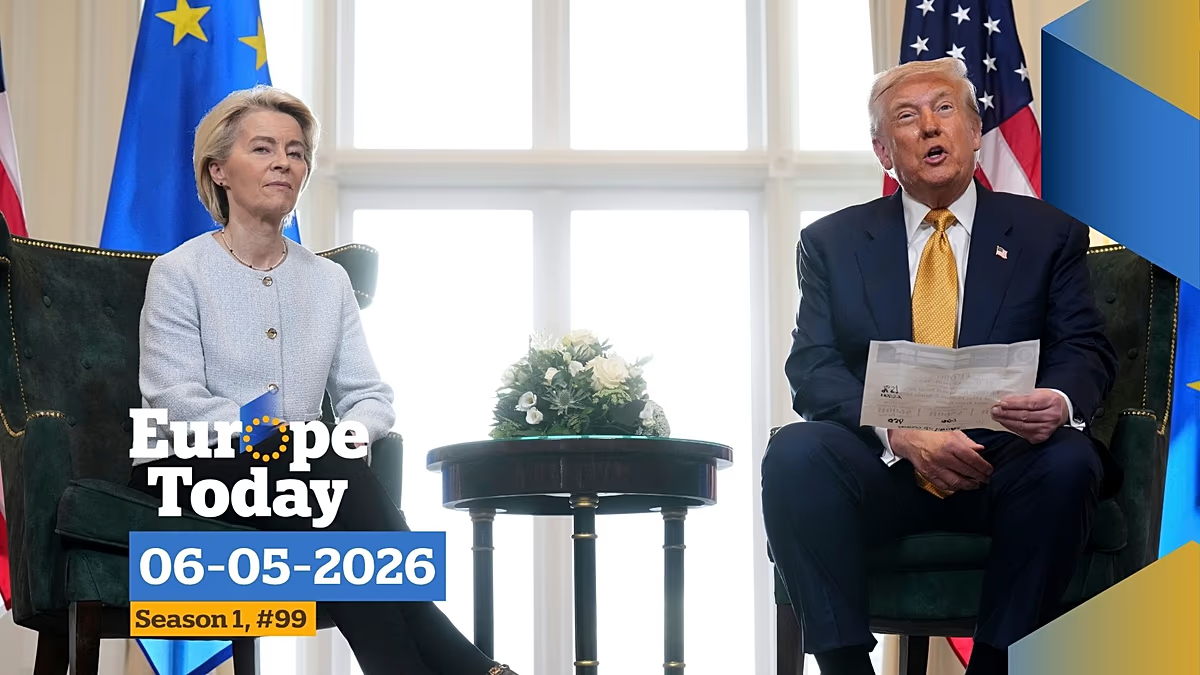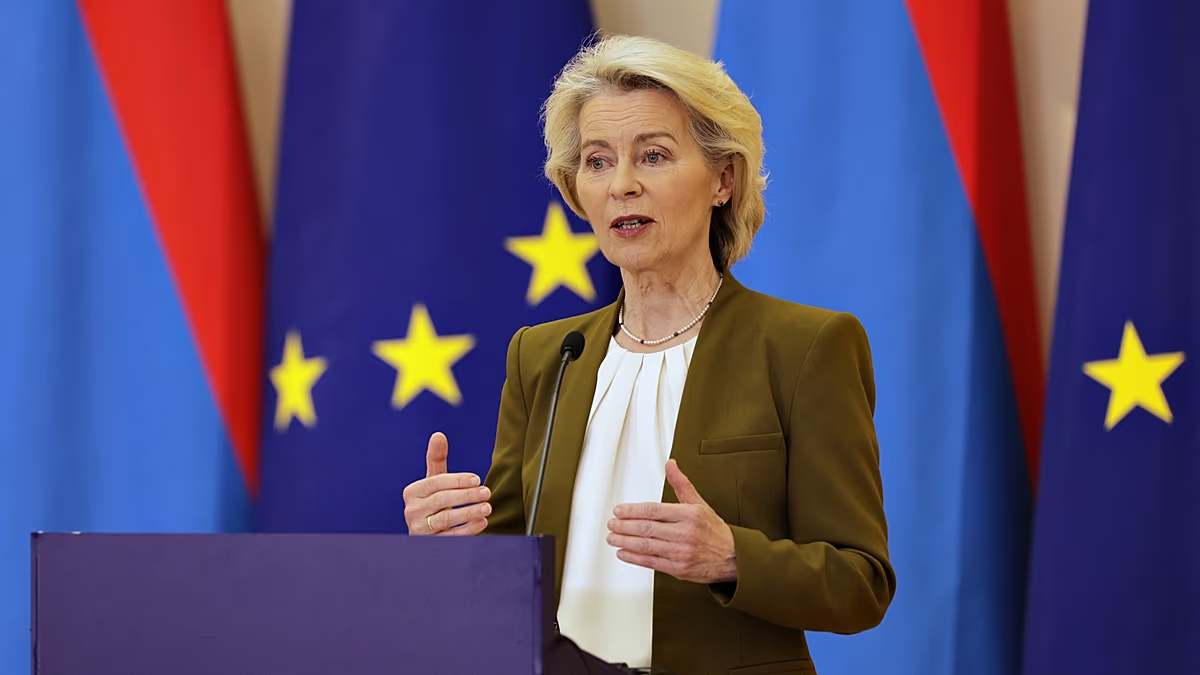


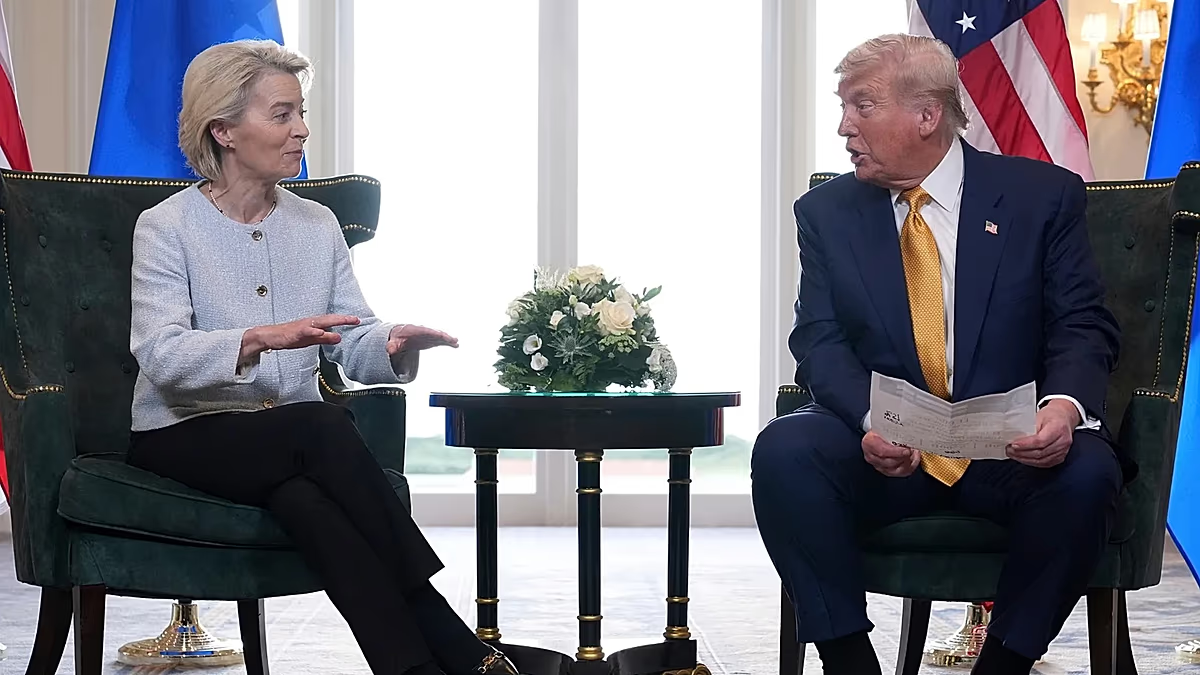
As Europe’s trade negotiators prepare for a critical round of talks with the United States, the atmosphere is one of strained urgency rather than optimistic diplomacy. The shadow of U.S. President Donald Trump looms large, with his recent threats to hike tariffs on European cars from 15% to 25% injecting a fresh dose of tension into the discussions. Scheduled for Wednesday evening, these negotiations between German MEP Bernd Lange, chair of the European Parliament’s trade committee, and representatives of the EU member states, aim to finalize a trade deal first agreed upon last summer. The goal is to translate the political understanding between Trump and European Commission President Ursula von der Leyen into a functional agreement, but the path is fraught with pressure from tight deadlines, stringent U.S. demands, and deep internal European divisions over how much to concede.
At the heart of the discord is a fundamental clash of strategy. On one side, the conservative European People’s Party (EPP), led by negotiator Željana Zovko, is pushing aggressively for swift implementation of the deal to end the paralyzing uncertainty for European businesses. The EPP argues that companies, particularly in the automotive sector, are “crying for help and for certainty” and cannot afford prolonged negotiations. They have signaled a willingness to drop previously crucial demands, such as a “sunrise clause” that would make EU tariff concessions conditional on the U.S. first honoring its commitments, including the 15% tariff cap. EPP leader Manfred Weber has taken a hardline stance, suggesting that if a compromise isn’t reached in the talks, the agreement should be put to a vote as-is, emphasizing a need for speed above all else.
Arrayed against this push for rapid adoption are other political factions and lawmakers who insist that any deal must include ironclad safeguards to protect European interests from the volatile U.S. administration. Members of the Socialists & Democrats (S&D) group and the Greens argue that the Parliament painstakingly built a mandate in March that included essential conditions: a mechanism allowing the EU to suspend the agreement if the U.S. raises tariffs above the agreed ceiling or threatens EU territorial integrity, and a demand for existing U.S. steel and aluminum tariffs to be lowered. For these groups, Trump’s very unpredictability—evidenced in his social media posts and tariff threats—compels the EU to insist on these balanced guarantees. As Green MEP Anna Cavazzini warned, forcing through a weakened deal under industry pressure is a “dangerous game” that could ultimately cause the entire agreement to collapse.
The divisions are not merely between political groups but are also reflected among the EU member states themselves, adding another layer of complexity to the negotiations. Germany, whose vital car industry is directly in the crosshairs of Trump’s latest tariff threats, is naturally anxious to secure a deal quickly to avoid economic damage. However, even Berlin is not advocating for an agreement at any price. France, meanwhile, has been more supportive of the European Parliament’s cautious approach, aligning with the demand for protective safeguards. EU diplomats express this schism candidly, with one noting that while there is a willingness to move toward the Parliament’s position, its current demands “are going too far.” Another diplomat pointed to the delicate balancing act: while a suspension clause is seen as necessary, there is also a desire not to provoke Trump by appearing as if the EU is reneging or failing to deliver.
Given these profound rifts, many involved are skeptical that tonight’s high-stakes meeting will yield a definitive breakthrough. Officials from the S&D group openly doubt a conclusive deal can emerge from a single evening of talks, suggesting the gulf between the desire for speed and the need for security is too wide. The expectation among some is that this session will instead serve to lay out political positions clearly, with the “harder and more technical discussions” deferred to a subsequent round of negotiations. This view advocates for continuing the negotiation process as originally foreseen, believing that a rushed, unstable agreement is worse than no agreement at all. The pressure, however, is relentless and continues to mount with each new tariff threat from Washington.
Thus, the EU finds itself in a painfully difficult position, caught between the immediate economic imperative to shield its industries from punitive tariffs and the strategic imperative to secure a durable, fair trade framework. Negotiators are walking a tightrope, trying to reconcile the urgent cries of businesses for stability with the parliamentary mandate designed to ensure long-term European sovereignty and resilience. The outcome hinges on whether a fragile compromise can be found—one that provides enough assurance to satisfy the Parliament’s demand for protections while being palatable enough for the Council and the U.S. to adopt swiftly. In an era defined by transactional diplomacy and economic pressure, these talks are a critical test of Europe’s unity and its ability to defend its interests while engaging with a volatile partner.