

Paragraph 1
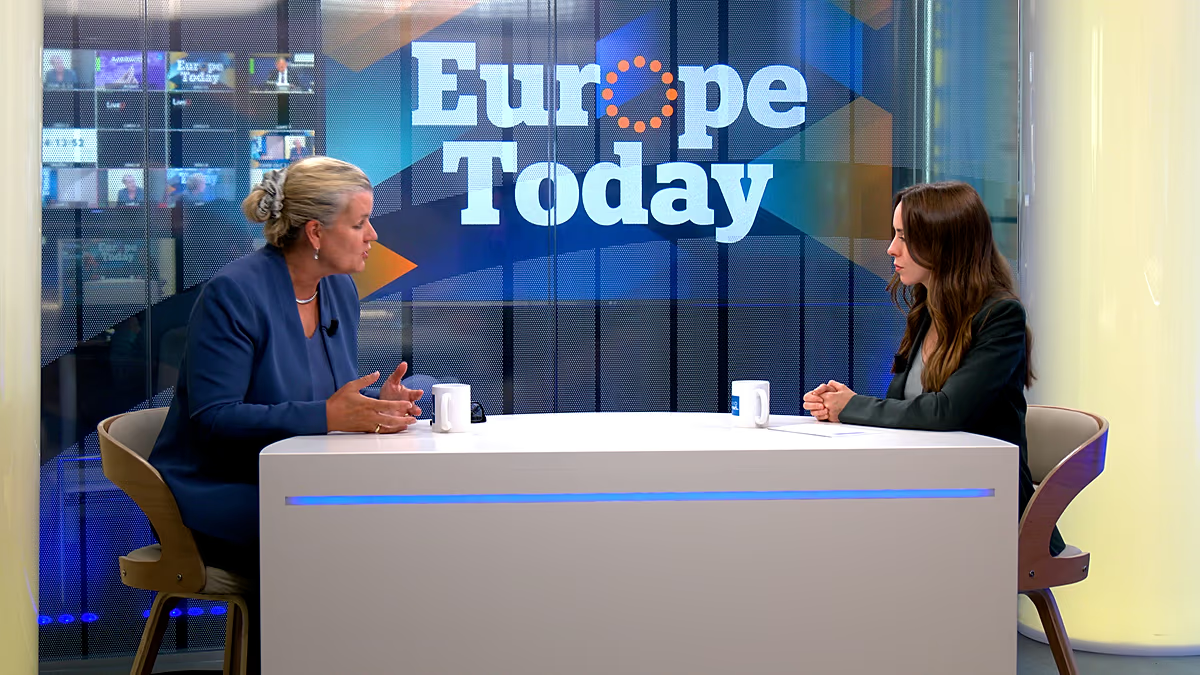
The United Nations is urging the European Union to proceed with extreme caution if it considers altering the temporary protection status granted to millions of Ukrainians who have fled the war. Kelly Clements, the UN’s Deputy High Commissioner for Refugees, emphasized in an interview with Euronews that any changes must be implemented “very gradually.” She stressed that the fundamental conditions that necessitated this protection—namely, the ongoing and intensifying conflict in Ukraine—have not ceased. The temporary protection directive, activated by the EU following Russia’s full-scale invasion in 2022, currently offers refuge and rights to work, housing, and education to approximately 4.37 million Ukrainians across member states, providing a vital lifeline without the complexities of individual asylum applications.
Paragraph 2
This call for caution comes amid growing political pressure from several EU countries, including Poland and Germany, to modify the scheme specifically concerning Ukrainian men of conscription age. These nations are reportedly pushing to exclude men between the ages of 23 and 60 from the protection, arguing that they are needed for Ukraine’s defense efforts. This proposal gained significant traction during a recent meeting of EU home affairs ministers. The debate touches on a sensitive intersection of humanitarian law, military necessity, and European solidarity, placing the plight of displaced individuals directly in the crosshairs of geopolitical strategy.
Paragraph 3
However, the situation on the ground in Ukraine complicates this political calculus. Ukrainian law already restricts most men within this age bracket from leaving the country, with exemptions only for specific groups such as fathers of three or more minor children, individuals with disabilities, those deemed medically unfit, or full-time caregivers for sick relatives. Furthermore, Ukraine’s formal conscription age begins at 25. While adult men constitute about 27% of Ukrainian refugees in Europe, precise data on how many are of military age or arrived through irregular channels is lacking, making broad policy changes potentially unfair and difficult to enforce accurately.
Paragraph 4
Clements articulated a deeply humanitarian perspective, framing the protection not just as a legal mechanism but as a crucial means of stability for uprooted families. “The war has not abated. It has become more intense, with more civilians caught in the middle,” she stated. Her concern is that prematurely removing protections could destabilize people who have built fragile new lives in host countries, forcing impossible choices between danger and destitution. She advocates for maintaining these protections until a secure peace is achieved, ensuring refugees can support themselves and preventing an undue burden from shifting suddenly onto other nations or aid systems.
Paragraph 5
The political stance in key host countries like Germany underscores the tension. German Chancellor Friedrich Merz has directly urged President Volodymyr Zelenskyy to curb the outflow of young Ukrainian men, stating they are “needed there” for the war effort. German Interior Minister Alexander Dobrindt has echoed this, noting an observed increase in Ukrainian men of military age arriving in Germany. These statements reflect a shifting mood in some European capitals, where initial, open-armed welcome is being weighed against prolonged conflict fatigue and concerns over Ukraine’s military manpower.
Paragraph 6
Ultimately, Clements brings the focus back to the human core of the crisis: the imperative for peace. She posits that the most sustainable solution for everyone—Ukraine, its citizens, and hosting nations—is an end to the hostilities that would allow for safe, voluntary, and dignified returns. Until that day arrives, she argues for a compassionate and predictable approach. If protections must evolve, the transition should be slow, deliberate, and coupled with alternative legal pathways for those who genuinely cannot return safely. The goal, she reminds us, is to manage a human tragedy with humanity, ensuring that policy adjustments do not exacerbate the suffering of those already caught in the crossfire of a war they did not choose.