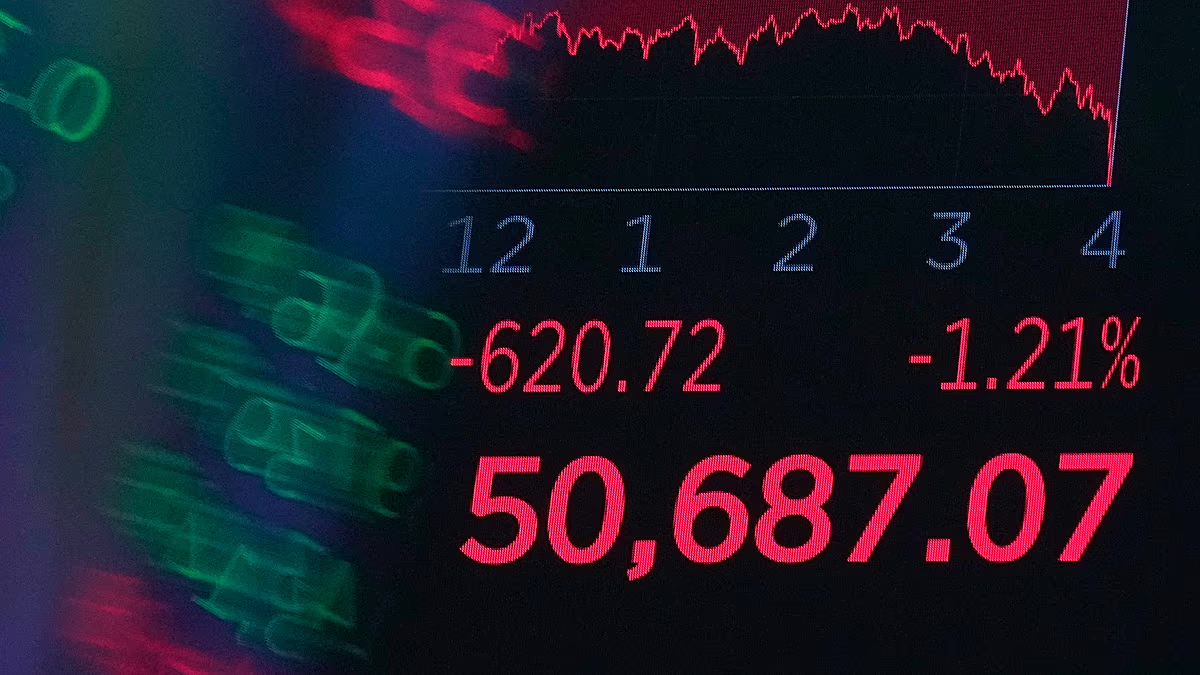




A gathering storm of rising interest rates, driven by growing global apprehension over lending money to the United States government, is tightening its grip on the American economy and its politics. As investors grow more wary of the sustainability of U.S. debt under the Trump administration, the cost of borrowing for the government has surged, with yields on the critical 10-year Treasury note climbing past 4.44%. This isn’t merely a Wall Street concern; it translates directly into higher mortgage rates, cooling auto sales, and increased costs for business loans, applying a painful squeeze on household budgets already strained by inflation. This financial pressure is creating a potent political risk for Republicans as the midterm elections approach, embedding the abstract concept of sovereign debt into the daily economic anxieties of voters.
The triggers for this shift are multifaceted, combining geopolitical strife with deep-seated fiscal worries. The conflict involving Iran disrupted energy markets, feeding inflationary fears that typically push interest rates higher. Simultaneously, investors globally are reassessing risks, from government debt loads to the capital demands of technological leaps like artificial intelligence. Within this context, the market is scrutinizing Washington’s fiscal plans with profound skepticism. While President Trump has pointed to tariff revenues, a proposed “Gold Card” visa program, and spending cuts to tackle the nearly $1.8 trillion annual deficit, economists widely dismiss these measures as insufficient. Experts like the Brookings Institution’s Jessica Riedl note that the administration’s own tax cuts are projected to add trillions to the deficit over a decade, far outweighing any tariff income. The foundational problem remains unchanged: the relentless growth of entitlement programs like Social Security and Medicare continues to outpace federal revenues.
This market skepticism manifests in the rising price of U.S. debt. Analysis by experts like Kent Smetters of the Penn Wharton Budget Model suggests that a significant portion of the spike in long-term Treasury yields is directly tied to expectations of persistent, massive government borrowing. It is a signal that lenders are demanding a higher premium for the perceived risk. This erosion of America’s traditional “fiscal space” alarms seasoned observers. Glenn Hubbard, a former White House economic advisor, warns that the nation may no longer have the borrowing capacity it possessed in 2008 or 2020 to effectively combat a future recession or crisis. The confidence that has long undergirded the U.S. dollar’s reserve currency status—the belief that the debt will always be repaid—is being tested. As Hubbard starkly puts it, “That works until it doesn’t.”
On the ground, these high-finance dynamics are fueling concrete political challenges. In congressional districts like Colorado’s 5th, Democratic candidates are weaponizing the issue. Candidates like Jessica Killin and Joe Reagan argue that every dollar spent servicing the national debt is a dollar not invested in infrastructure or education, and that high interest rates directly punish families trying to buy homes, finance cars, or manage credit card bills. They are framing the deficit not as a distant accounting problem, but as a root cause of the cost-of-living crisis. This messaging puts Republican incumbents on the defensive, forcing them to answer for an economic pressure that is palpable to their constituents, even if its origins in bond markets seem complex.
In response, the administration has doubled down on its narrative of fiscal rectitude, pointing to efforts to root out government fraud as a path to substantial savings. Treasury Secretary Scott Bessent recently cited potential annual savings of up to $500 billion from eliminating fraudulent spending—a figure derived from a Government Accountability Office report that included pandemic-era anomalies. While aiming to project control, the administration also places blame on its predecessor, with Bessent claiming they “inherited the worst budget deficit in history.” The stated goal is to reduce the annual deficit to 3% of GDP, though the timeline remains vague and the current deficit sits at roughly twice that level. This rhetorical focus on fraud and past mismanagement, however, does little to address the structural, long-term drivers of debt that are unsettling markets.
Ultimately, the power to force change may lie less with voters at the ballot box and more with investors in the global bond market. Their continued demand for higher yields on U.S. debt serves as a relentless, real-time critique of Washington’s fiscal trajectory. While the stock market may rally on corporate prospects, the bond market is sending a sobering message about government stewardship. The United States is navigating a precarious moment where its economic vitality and political fortunes are increasingly held captive by the very cost of borrowing to fund its own operations. The midterm elections may be the immediate flashpoint, but the larger question, echoing Hubbard’s concern, is whether the foundational confidence in U.S. credit can endure without a more credible plan for sustainability.