

Paragraph 1: A Diplomatic Storm Over Art and War
A recent meeting of European Union culture ministers in Brussels grew tense over a singular cultural event: the reopening of the Russian national pavilion at the prestigious Venice Biennale art exhibition. Led by Latvia’s Culture Minister Agnese Lāce, a significant majority of member states voiced strong criticism, framing Russia’s participation as an unacceptable exploitation of culture to sanitize its ongoing war of aggression against Ukraine. The ministers’ core concern was that the pavilion could serve as a propaganda platform for a regime accused of horrific crimes, effectively using the global stage of art to launder its international reputation. This debate transcended mere artistic disagreement, touching the raw nerve of Europe’s political and ethical stance toward Russia.
Paragraph 2: Financial Consequences and a Unified Front
The diplomatic disapproval was swiftly followed by tangible action, centering on a €2 million grant from the European Commission to the Biennale Foundation. Many ministers expressed clear support for the Commission’s move to freeze this substantial funding, a powerful tool of EU policy. Furthermore, there were calls to redirect these funds toward the reconstruction of war-torn Ukraine, a symbolic and practical repurposing of resources. While the ministers largely directed their ire at Russia’s presence itself, they carefully avoided overt criticism of host nation Italy, whose government was represented by an ambassador. This nuanced approach highlighted a desire for European unity against Russian aggression, while navigating the complex realities of the Biennale’s location and rules.
Paragraph 3: The Biennale’s Dilemma: Open Dialogue or Propaganda Platform?
Caught in the crossfire, the Venice Biennale Foundation finds itself in a profound ethical and operational dilemma. Its leadership defends the event as an essential “place of dialogue, openness and artistic freedom,” arguing that it cannot politically vet or exclude countries recognized by the Italian state. However, the European Commission and dissenting member states forcefully counter that such principles must have limits in the face of armed conflict and propaganda. They argue that neutrality can inadvertently provide a platform to individuals who support aggression, thereby violating the very spirit of cultural exchange. This clash pits a vision of an apolitical, open artistic forum against the conviction that culture must not be complicit in whitewashing atrocities.
Paragraph 4: Internal Italian Divisions Mirror the Broader Conflict
The controversy has exposed a sharp divide within the Italian government itself, mirroring the wider European schism. Italy’s Culture Minister, Alessandro Giuli, took a firm stand by boycotting the Biennale’s opening ceremony in protest of Russia’s participation. Conversely, Deputy Prime Minister Matteo Salvini championed the “freedom of art,” even visiting the Russian pavilion in a show of defiance against calls for a boycott. This internal conflict underscores how the issue cuts across traditional political lines, pitting principles of cultural solidarity with Ukraine against libertarian views on artistic expression and national sovereignty within the Biennale’s historic framework.
Paragraph 5: Protest and Institutional Crisis at the Opening
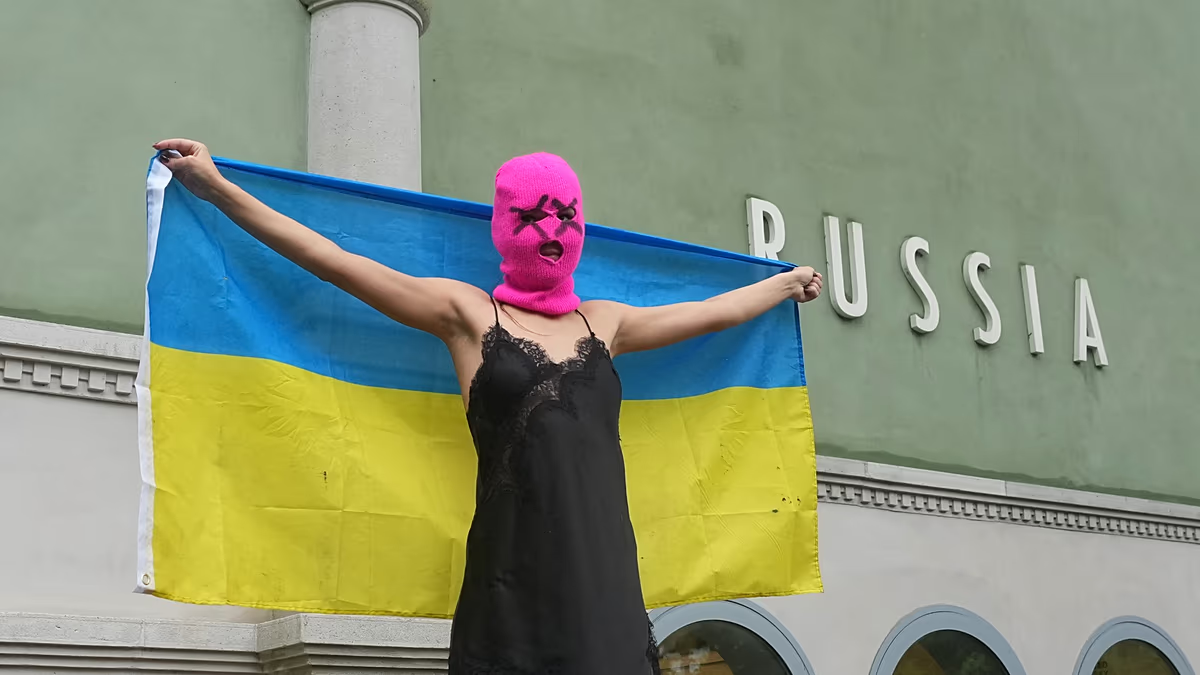
The 2026 Biennale’s opening days were anything but serene, overshadowed by active protest and institutional drama. Alongside Russia, Israel’s participation also drew demonstrations, highlighting how the event has become a flashpoint for global geopolitical tensions. Russian dissident art collectives, including Pussy Riot and Femen, staged dramatic topless protests against Vladimir Putin, ensuring that counter-nations to the official Russian narrative were visibly present. Simultaneously, the Biennale faced an internal crisis as its entire international jury resigned. Their collective departure stemmed from controversy over a decision to exclude from awards any countries whose leaders face International Criminal Court indictments for crimes against humanity—a rule seen by some as a necessary ethical line and by others as an unacceptable politicization of art.
Paragraph 6: The Enduring Question: Where Should Art Draw the Line?
The ongoing dispute over the Russian pavilion ultimately forces a difficult, recurring question upon the international cultural community: where should the line be drawn between artistic freedom and moral responsibility in times of conflict? The EU’s strong stance, combining diplomatic condemnation with financial leverage, represents a growing consensus that cultural institutions cannot claim neutrality when faced with clear aggression. The Venice Biennale, as one of the world’s most visible cultural stages, now serves as a crucial test case. Its resolution—whether through the sustained freezing of funds, a future change in its participation rules, or a continued adherence to its traditional openness—will set a significant precedent for how the art world navigates the complex intersection of creativity, politics, and human rights in an increasingly fractured world.