



Of course, here is a summary and humanization of the provided content, expanded to six paragraphs.
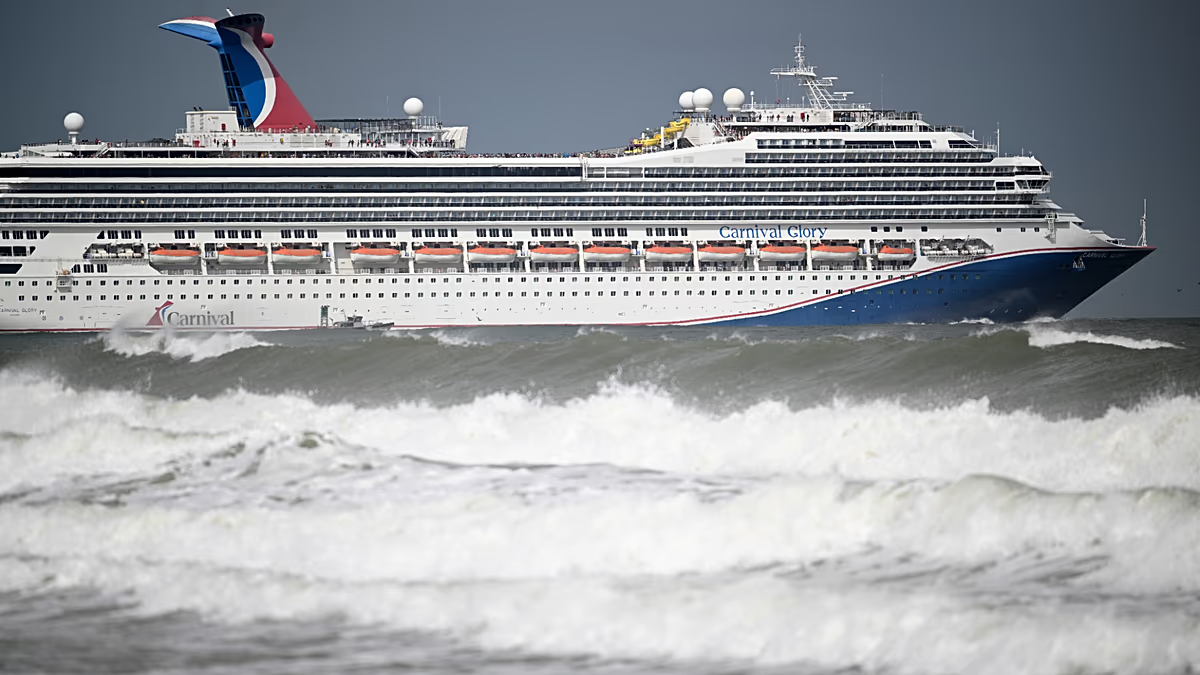
The romantic image of a cruise ship gliding into a picturesque port is more than just a postcard moment; it is a powerful engine for economic vitality. According to the World Travel and Tourism Council’s (WTTC) latest “Cruising for Impact” report, this industry is a formidable job creator on a global scale. The statistic is striking: for every twenty passengers who disembark to explore a new destination, one full-time job is sustained somewhere in the world. In 2024 alone, this translated to 1.8 million jobs globally, with the vast majority—nearly 80%—being land-based positions in the very communities ships visit. This directly counters the notion that cruise benefits are confined to the vessels themselves, instead highlighting a profound ripple effect that touches dockworkers, hotel staff, restaurant servers, tour operators, and countless other local professions.
The financial footprint of this activity is equally monumental. The report details a contribution of $98.5 billion to the global GDP, with the total economic output spurred by cruise tourism reaching a staggering $199 billion. Beyond these impressive macro figures lies the human element: $60.1 billion in wages earned by individuals and families worldwide. This economic infusion is not abstract; it is felt in the paychecks that support households and in the revenues that keep small, port-side businesses afloat. Direct spending linked to cruises hit $93 billion, a river of capital that flows directly into local economies, from family-run souvenir shops and artisan markets to farms supplying fresh produce and companies providing logistical services. This spending strengthens the micro-economies of destinations, providing a crucial buffer and growth opportunity.
Perhaps one of the most significant, yet less heralded, impacts of cruise tourism is its role as a compelling preview for future travel. The WTTC study reveals that more than 60% of cruise passengers are inspired to return for a longer, land-based visit to a destination they first encountered from the deck of a ship. This transforms the cruise industry into a dynamic gateway, introducing travelers to cultures, landscapes, and communities they might otherwise have overlooked. It acts as a powerful sampler, generating long-term demand and diversifying tourism flows. A stop in Valencia, Kotor, or Juneau is no longer just a day-trip, but a seed planted for a future two-week holiday, thereby spreading tourism benefits more broadly and sustainably over time.
The positive influence of cruising extends far beyond balance sheets and return visitor rates. The sector plays a nuanced role in social and community development. The creation of stable employment opportunities fosters talent development and promotes greater economic inclusion within destinations. Furthermore, the industry’s presence often catalyzes improvements in local infrastructure, from port upgrades to enhanced transportation links, which benefit residents and other visitors alike. There is also a growing emphasis within the sector on cultural preservation, partnering with communities to ensure tourism showcases heritage respectfully. Concurrently, facing increasing scrutiny, the industry is becoming a driver of environmental innovation, investing in cleaner technologies and practices that can set new standards for maritime and coastal resilience.
Looking ahead, the potential for this impact to grow is substantial. Despite its scale, cruising still represents only about 2% of the global holiday market, welcoming over 35 million travelers annually. This suggests considerable room for expansion as new generations seek travel experiences. The industry is poised for this growth, with passenger capacity projected to increase by 19% between 2022 and 2028. Each new ship represents not just more passengers, but more potential for the economic and social benefits outlined in the report to be amplified and extended to an even wider array of destinations, particularly in developing regions seeking a reliable tourism anchor.
The final takeaway from the WTTC report is a call for conscious collaboration. The future trajectory of cruise tourism is not predetermined. To maximize its benefits while diligently mitigating its challenges, a strong partnership between cruise lines, destination governments, and local communities is essential. With thoughtful planning, transparent dialogue, and shared commitments to sustainability, the industry can evolve to ensure its growth is not just measured in passenger numbers, but in its contribution to building more inclusive, resilient, and thriving economies around the world. The journey, therefore, is toward a model where the ship’s wake leaves not just a temporary stir, but a lasting, positive imprint on the shores it touches.