


Of course. Here is a humanized and expanded summary of the provided content, structured into six paragraphs.
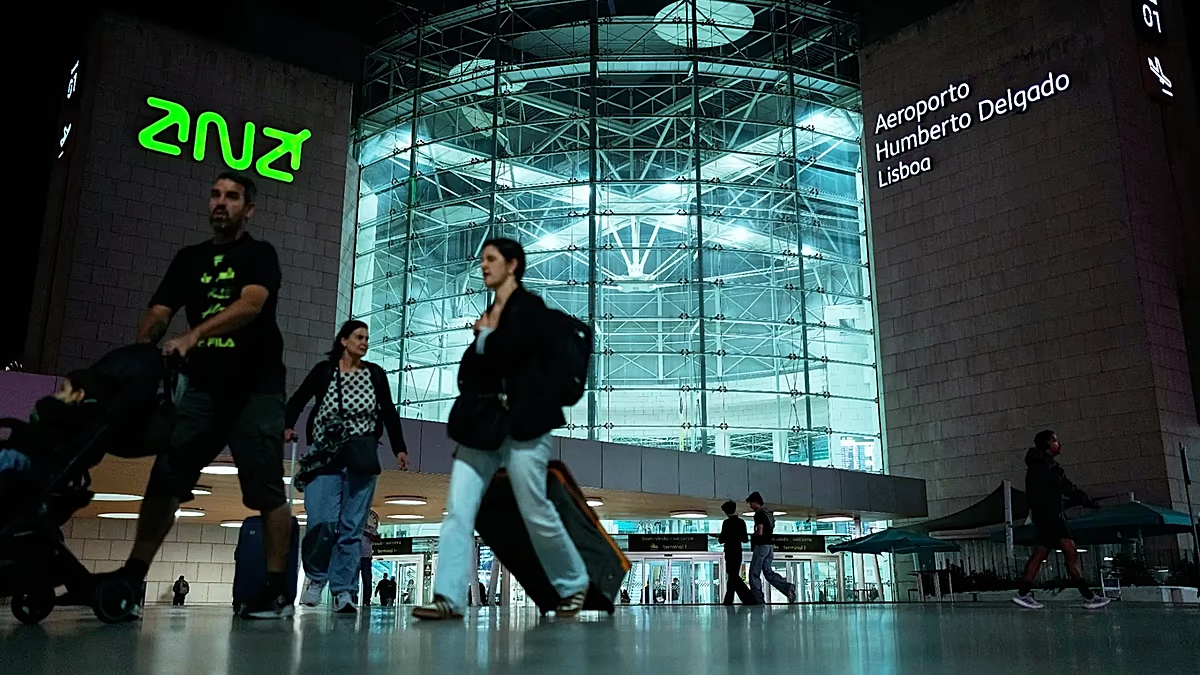
When we dream of Portugal, our minds often fill with specific postcard scenes: the sun-drenched, historic alleyways of Lisbon, the vibrant, wine-cellared banks of Porto, or the golden cliffs and pristine beaches of the Algarve. For decades, the nation’s tourism engine has been powerfully fuelled by these iconic coastal hubs, drawing millions to their unique charms. Yet, this very success has sown the seeds of a growing challenge, felt acutely by residents in these beloved cities. A quiet frustration is simmering beneath the surface, a sense that the authentic soul of local communities is being eclipsed by the sheer volume of visitors, transforming vibrant neighborhoods into what some describe as “ghost places” populated more by temporary guests than by permanent neighbors. It is against this backdrop of phenomenal success and its attendant strains that Portugal is embarking on a bold and necessary reimagining of its tourist map, seeking not to diminish its classics but to dramatically enrich its overall offering.
Recognizing both the economic imperative of tourism and the social need for balance, the Portuguese government has launched a strategic offensive named “Turismo +,” or “Growing with Tourism.” With a substantial total budget of €30 million, this initiative is the driving force behind a conscious, nationwide effort to redistribute tourism’s benefits. The latest move, a €4.5 million state injection catalyzing a total investment of around €11 million, is specifically targeted at 12 innovative projects scattered across the country’s overlooked interior and under-visited regions. This is not mere subsidy; it is a calculated investment in the future, aiming to draw the spotlight inland to the rolling plains of Alentejo, the agricultural heartlands of Ribatejo, and the verdant, mountainous areas of the north and center. The goal is clear: to create compelling reasons for travelers to linger longer, venture further, and discover the profound depth that exists beyond the coastline.
The philosophy behind this funding is as important as the funding itself. As explained by Castro Almeida, the Minister of Economy and Territorial Cohesion, the vision acknowledges a dual reality. While large-scale, metropolitan projects often possess their own momentum, smaller, community-focused initiatives in inland areas—those aimed at enhancing unique cultural and natural heritage—require a nurturing hand. These are the projects, he argues, that are “highly appealing and novel for foreign visitors” but must be actively “promoted and made known.” Therefore, the investment prioritizes a diverse array of entities—public, private, and associative—working on the ground. The focus sectors are deliberately chosen to reflect modern, sustainable travel trends: nature immersion, authentic gastronomy, active adventure, wellness retreats, and deep cultural exploration. The funding aims to catalyze new tourism products, promote “smart” territorial development, and breathe new life into historical assets, all while advancing principles of sustainability and urban regeneration.
This strategic pivot is not happening in a vacuum. The numbers underscore both the opportunity and the urgency. In 2025 alone, Portugal welcomed a staggering 32.5 million visitors, with international travelers from powerhouse markets like the UK, the US, Spain, Germany, and France leading the way, generating €29.1 billion in tourism receipts. These figures validate tourism as, in Minister Almeida’s words, a “very important activity” that “pulls the country upwards.” However, the concurrent rise in community discontent in hotspots like Lisbon and Porto presents a clear signal: a model overly reliant on a few concentrated nodes is reaching its social and infrastructural limits. By fostering compelling alternatives elsewhere, Portugal aims to alleviate the pressure on its most famous cities while ensuring the economic windfall of tourism is more equitably shared across the nation, strengthening the social fabric of regions that have watched the boom from a distance.
Critically, the “Growing with Tourism” initiative understands that building infrastructure and marketing new destinations is only half the battle. The human element is paramount. A significant portion of the investment is therefore dedicated to upskilling and capacity-building programs for workers within the sector, with special attention to those in vulnerable circumstances. This forward-thinking approach ensures that as new tourism products are created—from curated culinary trails and historical walking tours to eco-lodges and adventure outfitters—the local workforce is prepared, trained, and empowered to deliver high-quality experiences. It transforms tourism development from a top-down imposition into a grassroots opportunity, fostering local ownership and ensuring that the economic benefits translate into meaningful careers and community resilience, rather than fleeting seasonal jobs.
In conclusion, Portugal’s multi-million euro investment into its inland regions represents far more than a simple diversification of tourist attractions. It is a holistic national strategy to future-proof one of its most vital industries. By addressing the dual pressures of overtourism in iconic cities and under-development in rural areas, the country is proactively writing a new chapter for its tourism story. Minister Almeida’s perspective that, overall, Portugal does not have “too many tourists” for the country as a whole is the guiding principle; the task is to better distribute them in space and time. This ambitious recharting of the tourist map promises a richer, more sustainable, and more authentic experience for visitors, who will discover the profound beauty of Portugal’s interior, while simultaneously offering a vital lifeline to local communities and preserving the unique character of its world-famous cities for generations to come.