



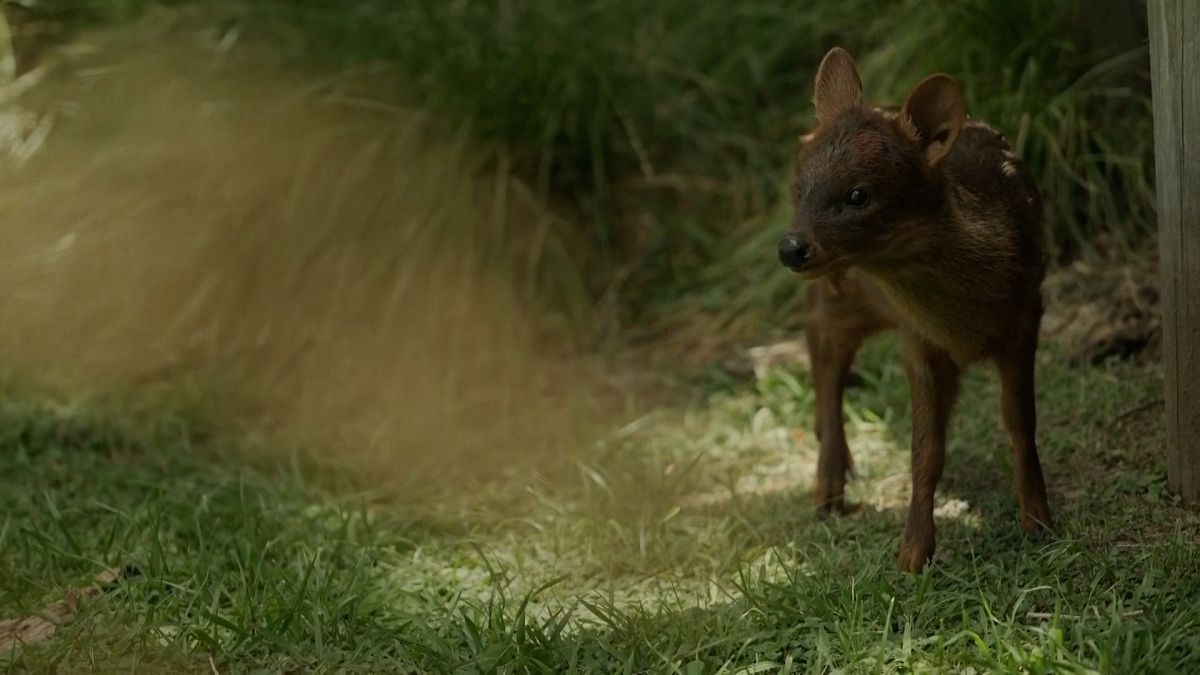
The pudu, encompassing three distinct species, holds the distinction of being among the world’s smallest deer, with some species reaching a height of approximately 50 centimeters. The Southern pudu (Pudu puda), specifically, faces a precarious future, classified as “near threatened” by the International Union for Conservation of Nature (IUCN). This designation reflects a concerning population decline of up to 20% over a relatively short period, spanning the years 2004 to 2017. The dwindling numbers underscore the vulnerability of this diminutive deer and the urgent need for conservation efforts.
The Temaikèn biopark in Argentina plays a crucial role in the preservation of the Southern pudu, offering a controlled environment conducive to breeding and research. This facility provides a safe haven for the species, allowing scientists to study its reproductive biology and gather vital information for its conservation. The biopark’s efforts are particularly significant given the pudu’s elusive nature in the wild, making research in natural habitats challenging. The controlled setting allows for close observation and data collection, contributing significantly to our understanding of this delicate species.
Habitat loss, driven primarily by deforestation and agricultural expansion, poses a significant threat to the Southern pudu. As human populations grow and land demands increase, the pudu’s natural habitat shrinks, forcing them into smaller, more fragmented areas. This fragmentation isolates populations, reducing genetic diversity and making them more susceptible to disease and other threats. The conversion of forests into farmland and grazing pastures further deprives the pudu of its natural food sources and shelter.
Predation by introduced species, such as domestic dogs and feral cats, compounds the challenges facing the Southern pudu. These non-native predators, often lacking natural controls in their new environments, can decimate pudu populations. The small size and gentle nature of the pudu make them particularly vulnerable to these introduced predators, which have contributed significantly to their decline. Efforts to control these invasive species are critical for the pudu’s long-term survival.
Disease also poses a considerable threat to the Southern pudu, although the full extent of its impact remains unclear. Exposure to diseases carried by domestic livestock and other animals can have devastating consequences for wild pudu populations, which often lack the immunity to combat these novel pathogens. Further research is needed to fully understand the role of disease in pudu population dynamics and to develop effective mitigation strategies.
Conservation efforts for the Southern pudu focus on habitat preservation, predator control, and research. Protecting remaining forest habitats and restoring degraded areas are essential for ensuring the pudu’s long-term survival. Controlling populations of introduced predators, such as dogs and cats, can also significantly reduce predation pressure on pudu populations. Continued research, both in the wild and in controlled environments like the Temaikèn biopark, is crucial for deepening our understanding of pudu biology, ecology, and the threats they face, ultimately informing more effective conservation strategies.