

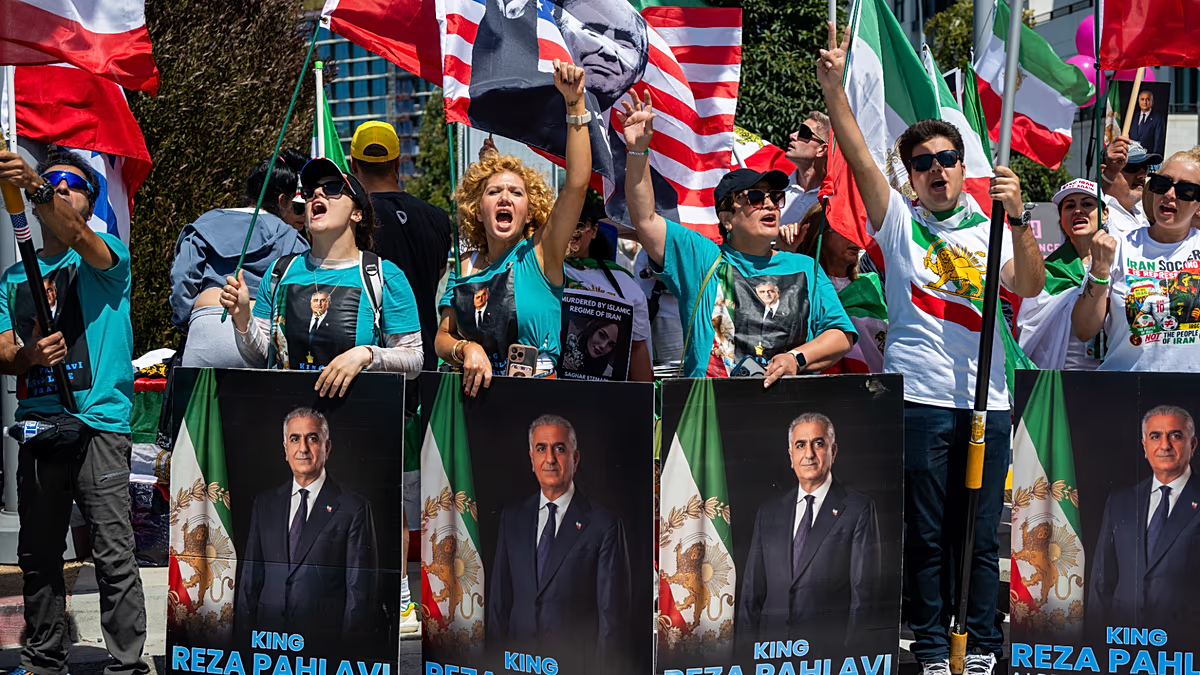
The stage was set for a dramatic convergence of sport and politics, as a significant demonstration unfolded in Los Angeles. The protest occurred just days before the Iranian national football team’s critical opening match in the World Cup group stage against New Zealand on June 15th. This timing was far from coincidental; the global spotlight of the world’s most-watched sporting event provided a potent platform for voices often marginalized on the international stage. The protesters aimed to harness the immense visibility surrounding the tournament, transforming the host city’s streets into a forum for urgent dialogue that extended far beyond the pitch.
At the heart of the gathering was a profound desire to spotlight the ongoing and severe political and human rights issues within Iran. Participants sought to remind the global audience that while their national team competed under the banner of the Islamic Republic, millions of citizens and exiles contend with realities of oppression and restricted freedoms. Furthermore, the protesters articulated a clear opposition to what they perceive as the Iranian team’s deep ties to the state’s governing apparatus. For many demonstrators, the team is not seen as an apolitical representative of the Iranian people, but rather as an extension of a government they oppose, making its participation in the World Cup a deeply contentious and emotional issue.
This public dissent unfolded against the backdrop of a specific and symbolic controversy involving FIFA, the world governing body of football. Reports had circulated that FIFA would prohibit the display of the “Lion and Sun” flag inside tournament venues. This historical banner, which served as Iran’s official flag prior to the 1979 Islamic Revolution, has been profoundly repurposed in the decades since. For the current regime, it is a relic of the past, replaced by the present-day Islamic Republic emblem. However, for a vast number of Iranian opposition groups and the global diaspora, the “Lion and Sun” has been reclaimed as a powerful symbol of resistance, national identity, and a longing for a different future.
The attempted prohibition of this flag by FIFA struck a deep chord, feeling to many like an erasure of their identity and a silencing of their political expression. It framed the protest not just as a demonstration against a government, but also as a defense of cultural and historical symbolism against the often-neutral, commercialized arena of international sport. The protesters viewed this move as aligning the tournament’s administration with the sensitivities of the Iranian state, thereby invalidating the voices of its critics. This clash highlighted the inherent tension within global sports institutions, which strive for a frictionless environment yet routinely become arenas for the world’s most pressing geopolitical struggles.
Ultimately, the demonstration in Los Angeles was a poignant manifestation of how modern mega-events like the World Cup refract complex national narratives. For the players on the field, the tournament represents the pinnacle of athletic achievement. For the watching world, it is thrilling entertainment. But for the protesters, it was a rare and powerful moment of global attention—a chance to ensure that the story of Iran told during the World Cup was not one-dimensional. They insisted that the narrative include the struggles of the Iranian people, the symbolism of their history, and the unresolved conflict between a state and many of its citizens.
As the team prepared for its sporting battle, the echoes of this political battle in the host city served as a sobering reminder. The beautiful game, in its global incarnation, is never just a game. It is a canvas upon which histories are remembered, identities are asserted, and profound political conflicts are performed for a worldwide audience. The protest underscored that for many Iranians, both at home and abroad, supporting their national team is an emotionally and politically complicated act, intertwined with hope for athletic glory and a deeper, more profound hope for change and recognition.