

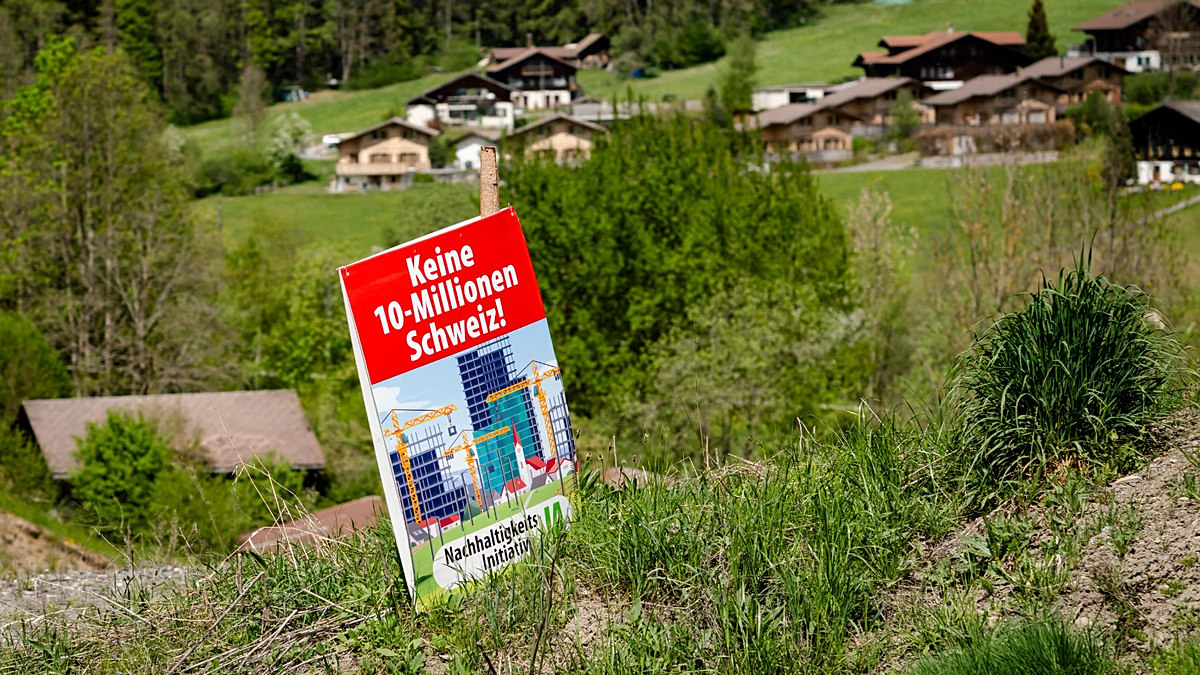
On a quiet Sunday in Switzerland, the Alpine nation’s unique form of direct democracy was in full swing. Voters across the country’s 26 cantons were deciding on a pivotal proposal that could have reshaped Switzerland’s future: a plan to cap the national population at 10 million people by the year 2050. Championed by the right-wing Swiss People’s Party (SVP)—the largest party in parliament—the so-called “sustainability initiative” framed rapid demographic growth as a threat to the country’s infrastructure, housing, natural resources, and social harmony. With foreign nationals making up nearly a third of Switzerland’s current population of about 9.1 million—a rise of almost 25% over a single generation—the debate touched deep questions of identity, capacity, and sovereignty. Yet as the ballots were counted, early results painted a clear picture: the Swiss people had chosen openness over restriction.
The proposal, had it passed, would have obligated the government to take decisive steps to control population growth, primarily through limiting immigration. This would have put Switzerland on a collision course with its own economic realities and its delicate relationship with the European Union. Though not an EU member, Switzerland is intricately linked to the bloc through a web of bilateral agreements that ensure the free movement of people, goods, and services—agreements often credited with fueling the country’s prosperity. Many opponents, including the federal government, parliament, and major business groups, warned that the initiative risked severing these vital ties. Some even likened it to a “Swiss Brexit,” fearing it would isolate the country economically and culturally, given that Switzerland is geographically surrounded by four EU nations.
Despite the SVP’s years of campaigning on anti-immigration sentiment, particularly regarding workers from neighboring EU countries, the referendum was ultimately rejected by a solid majority. Nationwide, nearly 53% of voters said “no,” with turnout exceeding 57%. The results revealed a notable urban-rural divide, with cosmopolitan centers like Geneva—home to numerous United Nations agencies and international organizations—strongly opposing the measure. In the central Paquis neighborhood of Geneva, schoolteacher Natascha Robert voiced a sentiment shared by many “no” voters: that Switzerland’s growing diversity is an asset, not a liability. “I think people always have something to bring us,” she said, emphasizing that her own Swiss heritage felt no less secure amid demographic change.
Nevertheless, the concerns behind the initiative reflect real pressures in Swiss society. Supporters like Maria Lalu, a former diplomatic worker from the Philippines who has lived in Switzerland since the 1980s, voted “yes” not out of hostility toward immigrants, but from a desire for more orderly and sustainable immigration policies. “I have nothing against immigration. I also am a stranger,” she explained after casting her ballot. The SVP argued that schools, hospitals, public transport, and the environment are straining under population growth, and that Swiss quality of life must be preserved. Yet critics pointed out that immigration has also been a lifeline, bringing essential skills to sectors like healthcare, finance, pharmaceuticals, and technology—helping to sustain Switzerland’s high standard of living and economic innovation.
The referendum process itself is a hallmark of Swiss political culture, allowing citizens to directly shape national policy through votes typically held four times a year. Most Swiss cast their ballots by mail, with in-person voting closing at noon on Sunday. Had the population cap been approved, the government would have been compelled to restrict asylum, family reunification, and residency permits. More dramatically, it might have been forced to terminate the EU agreement on the free movement of people if the population approached 9.5 million before 2050. Such a move would have sent shockwaves through Switzerland’s economy and its diplomatic relations, underscoring the high stakes of the vote.
In the end, Switzerland chose continuity over radical change. While approving a separate, less contentious measure to amend the Civil Service Act on the same day, voters decisively rejected the population cap—a result that reaffirms the country’s commitment to its European partnerships and its historically pragmatic approach to immigration. The vote does not mean concerns about integration and infrastructure will disappear, but it suggests that a majority of Swiss believe these challenges can be met without closing doors. In a world where debates over borders and identity grow increasingly polarized, Switzerland’s Sunday referendum offered a nuanced lesson: that a nation can both cherish its traditions and confidently engage with a globalized future.