


The Unsettling Path of a Paris Attack Conspirator: Justice, Release, and Raw Outrage
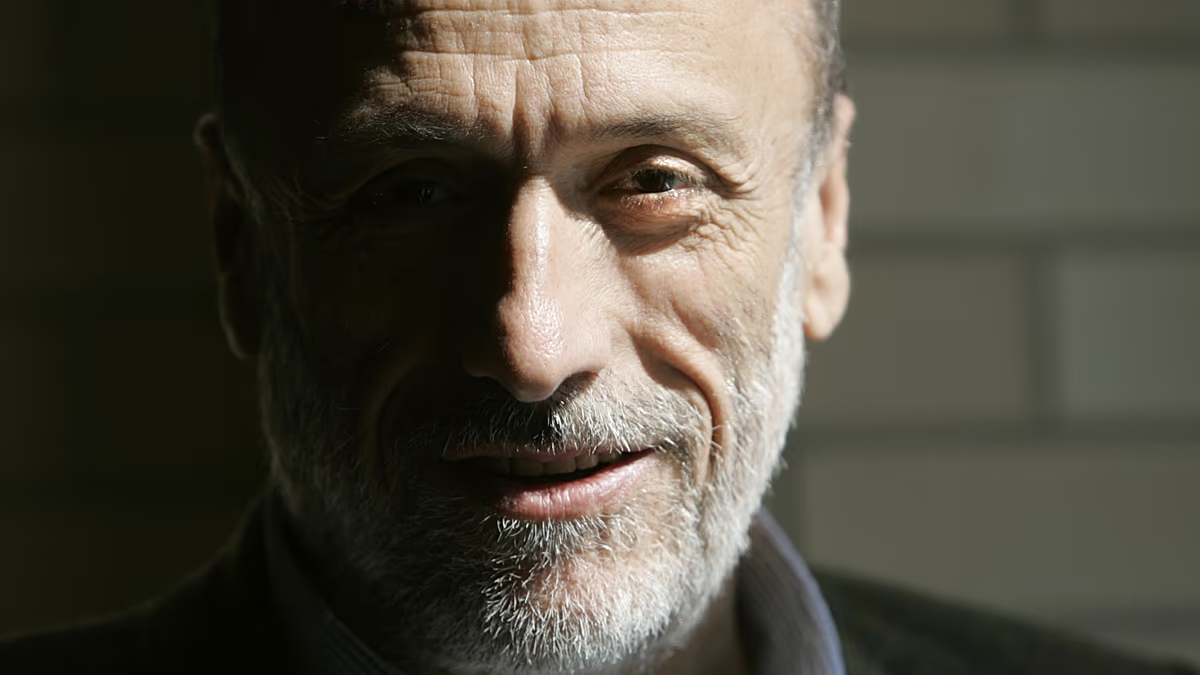
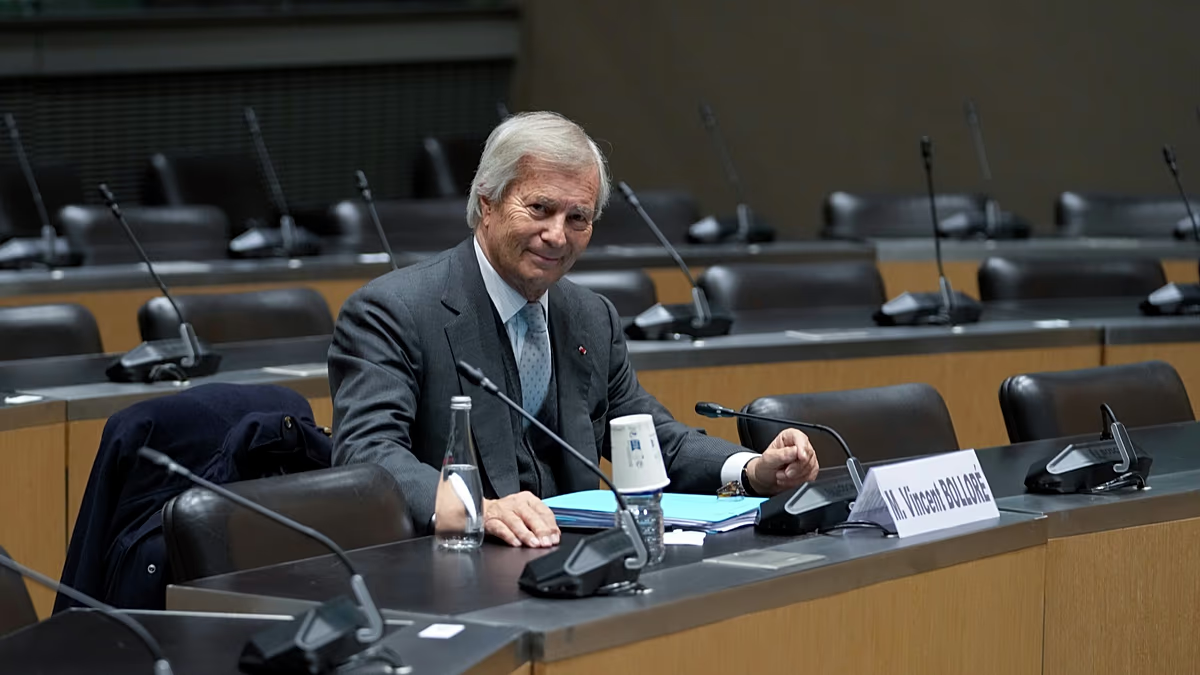
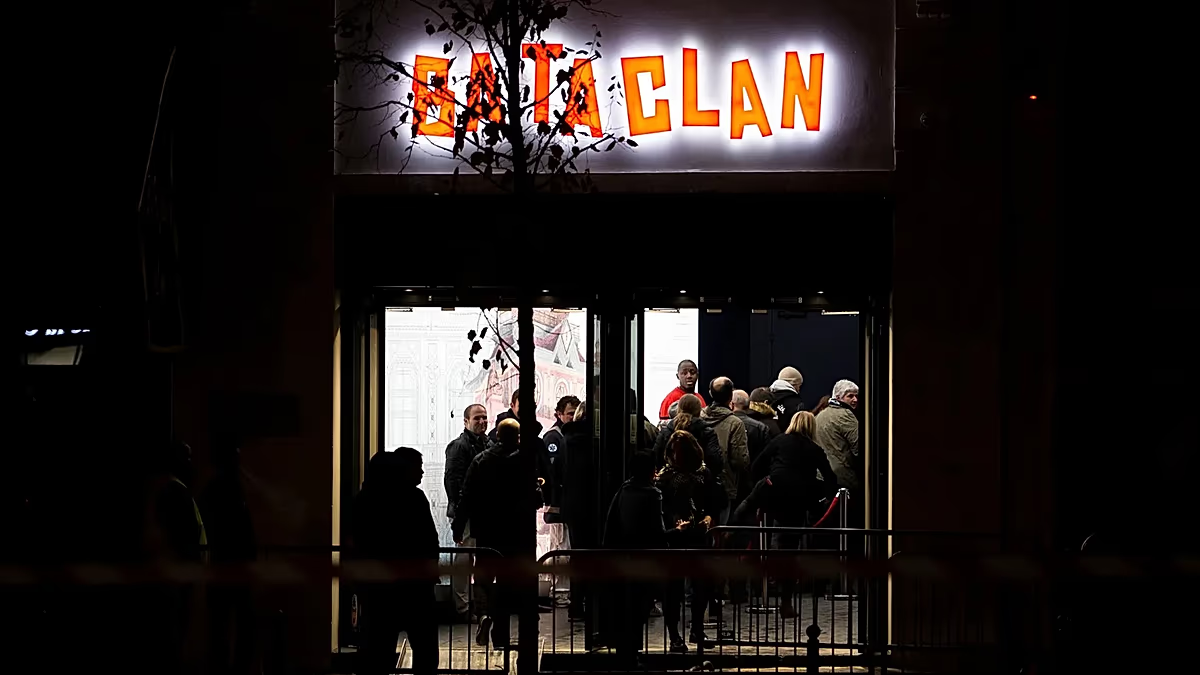
Nearly a decade after the night of November 13, 2015, when coordinated terrorist attacks in Paris killed 130 people and wounded hundreds more, a new chapter in the painful saga is unfolding, one that has reignited deep wounds and sparked a fierce debate about justice, punishment, and the possibility of rehabilitation. At the center of this storm is Mohamed Bakkali, a key logistical coordinator for the ISIS cell that carried out the atrocities. In 2022, a French court sentenced him to 30 years for his crucial role in providing weapons, phones, and safe houses for the assailants who stormed the Bataclan theatre and detonated suicide bombs across the city. Extradited to Belgium, he also received a 25-year sentence for plotting a separate attack on a Thalys train. Now, a decision by a Brussels court has determined that Bakkali is eligible for temporary prison leaves, a move seen as a precursor to potential conditional release, and one that has provoked visceral outrage on both sides of the border.
The practical details of the decision are as follows: despite opposition from prosecutors, a court has granted Bakkali the possibility of six temporary releases from the maximum-security Ittre prison, each lasting 36 hours. Belgian authorities clarified that the prosecution has no right to appeal, making the ruling final, and that implementation falls to the prison director. Importantly, as reported by Le Monde, such leave is typically a procedural step within the Belgian system that can lead to parole under electronic monitoring, potentially after serving only one-third of a sentence. For the families of the victims and many observers, this bureaucratic process represents a chilling and premature loosening of the grip on a man convicted of enabling mass murder.
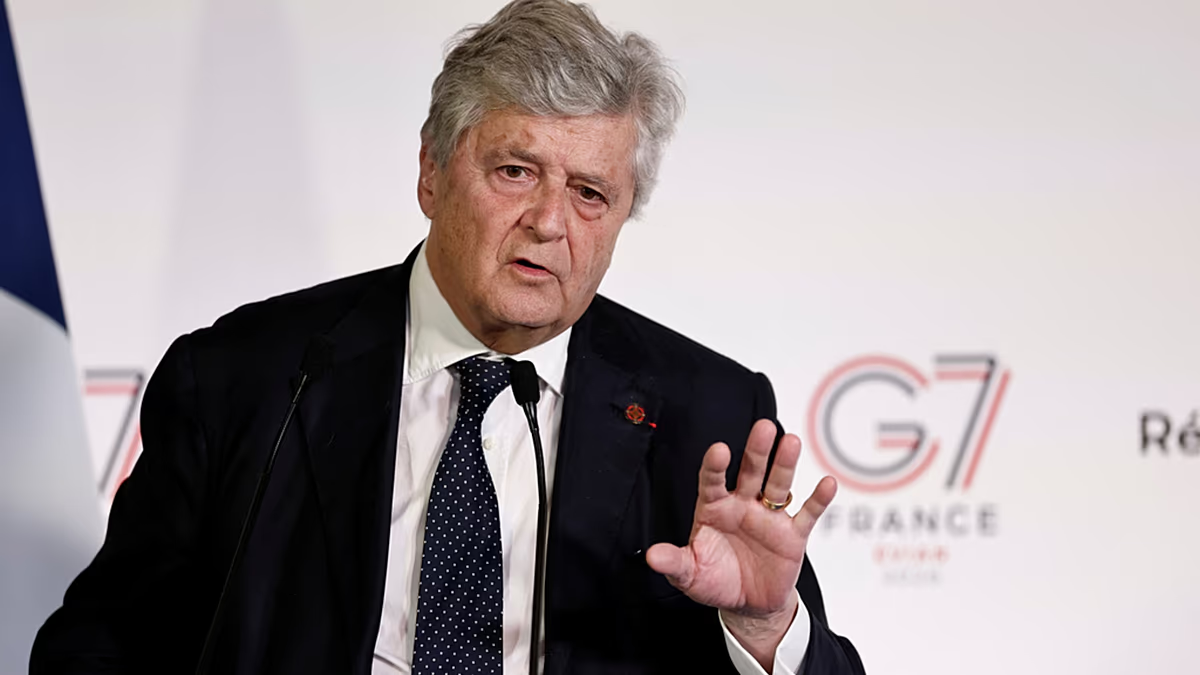
The emotional and political reaction in France has been one of profound anger and a sense of betrayal. Thibault de Montbrial, a French lawyer and security expert, condemned the developments as “a slap in the face to the victims, to the investigators, and to the justice of democracies.” This sentiment was echoed in the political arena, with Matthieu Valet, a French MEP from the far-right National Rally, calling it “a huge middle finger to French justice and the victims.” Their statements capture a widespread feeling that the gravity of the crimes committed demands not just incarceration, but the fullest measure of punishment available, devoid of any privileges or early release mechanisms that might apply to other types of offenders.
In Belgium, where Bakkali is imprisoned, the decision has similarly ignited a fierce political firestorm, transcending traditional party lines. Denis Ducarme, an MP from the centrist Reformist Movement, framed the court’s action as “turning one’s back on the memory of the victims and the pain of the families,” concluding with a scathing, “What a country. What a disgrace.” From the right, Alexander van Hoecke of the Vlaams Belang party announced his intention to submit legislation specifically designed to block convicted terrorists from accessing any form of penitentiary leave or early release. This cross-spectrum condemnation highlights how the trauma of the 2015 attacks continues to resonate powerfully, challenging standard judicial procedures when applied to crimes of terrorism.
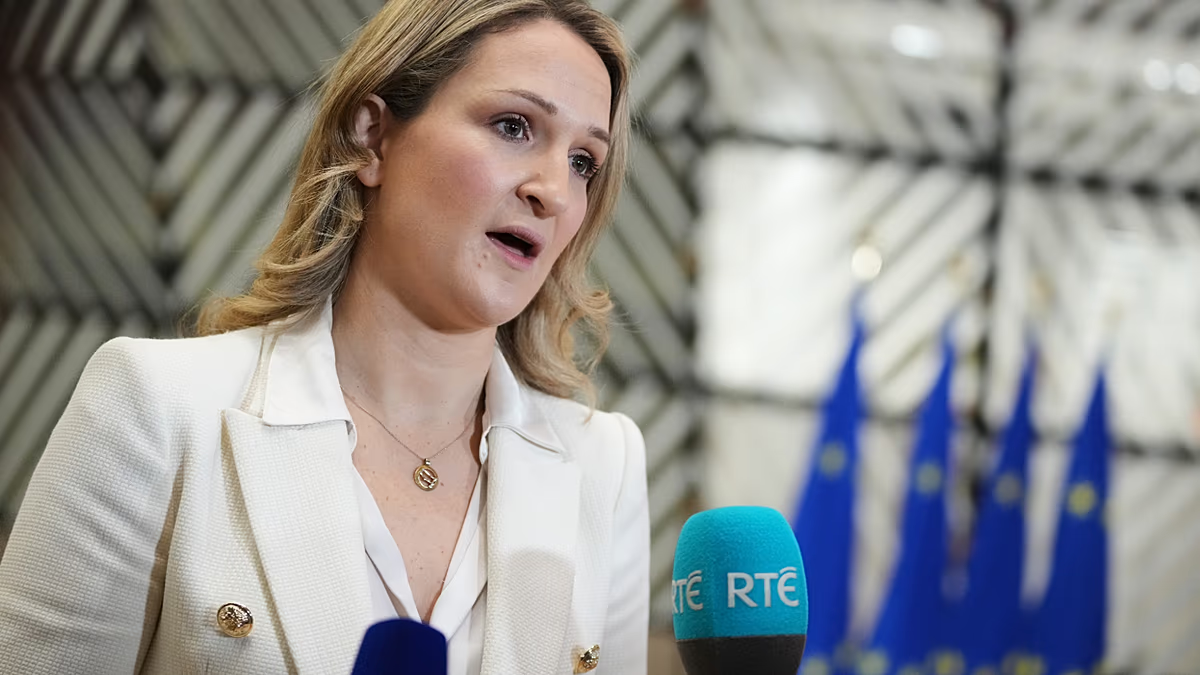
In response to the growing controversy, Belgian Justice Minister Annelies Verlinden offered a defense of the system, however strained it may sound to victims’ families. She emphasized that the decision followed “a thorough review of the case” and would be applied under “very strict conditions,” noting that Bakkali had previously been granted shorter leaves without incident. This justification points to the cold calculus of penal systems, which must balance retribution with protocols designed for eventual reintegration, even for the most reviled convicts. Yet, this administrative rationale stands in stark contrast to the raw human emotion evoked by the prospect of any freedom for those connected to the Bataclan horror.
Ultimately, the case of Mohamed Bakkali forces a painful and unresolved societal confrontation. It pits the relentless, enduring grief of victims and a public demand for irrevocable justice against the impersonal, forward-moving mechanisms of a legal system that operates on fixed rules and timelines, even for terrorism. The temporary leaves are not a pardon, but they are perceived as a first, unacceptable step toward one. As Belgium manages his detention and France watches on, this situation underscores a fundamental and agonizing question: Can a democratic justice system ever impose a sentence that feels proportionate to the scale of such a loss, and will the procedures designed for ordinary criminals ever be accepted when applied to the architects of extraordinary evil? For many, the answer, written in the blood of November 2015, remains a resounding no.