


Poland’s EU Presidency and the Lessons of Ukraine’s War-Torn Energy System
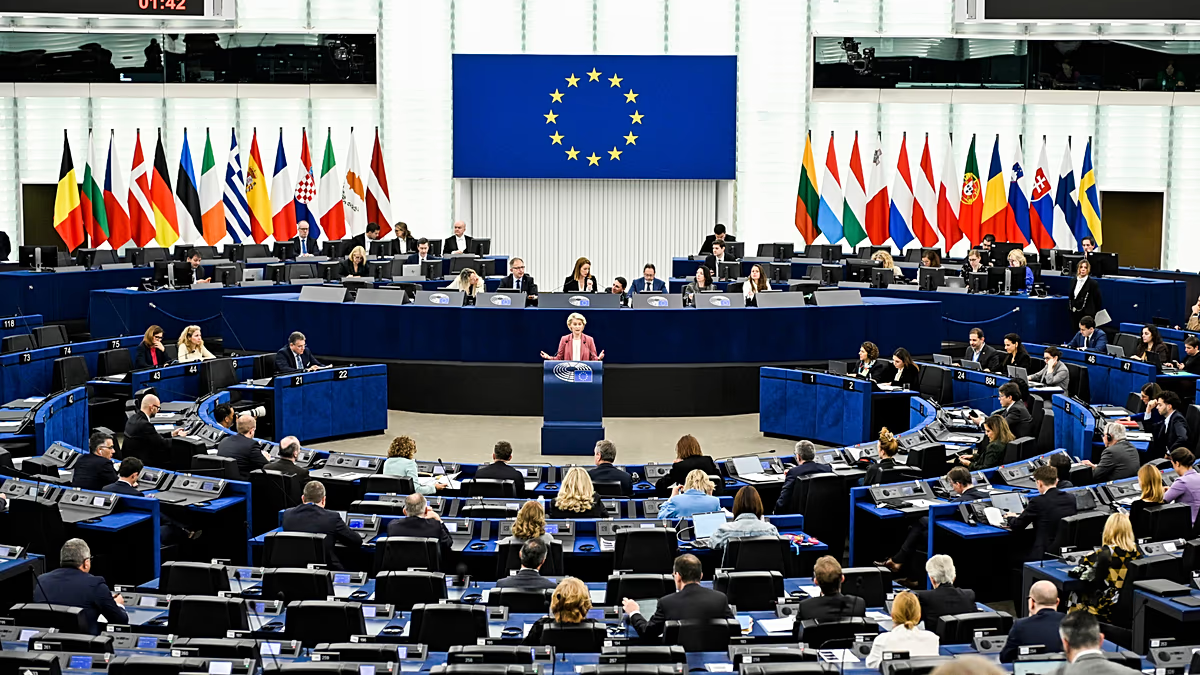
As Poland prepares to assume the EU Council presidency, the ongoing conflict in Ukraine casts a long shadow over Europe’s energy landscape. The war, marked by Russia’s deliberate targeting of Ukraine’s energy infrastructure, has inadvertently provided valuable insights into strengthening energy security and resilience, a perspective underscored by Krzysztof Bolesta, Poland’s deputy minister for climate and environment. Bolesta highlights the importance of distributed generation, secure supply chains, and overall energy security, all of which have come into sharp focus as Ukraine struggles to maintain its energy system amidst relentless attacks. This experience, he argues, offers crucial lessons for Europe as it navigates a complex geopolitical environment and seeks to fortify its own energy infrastructure.
Ukraine’s efforts to rebuild its energy system with a focus on green technologies, showcased at the COP29 climate summit, further underscores the potential for integrating sustainability and resilience. Bolesta’s offer to open the energy chapter of EU accession negotiations with Ukraine during Poland’s presidency signifies a commitment to supporting Ukraine’s integration with the European energy market and fostering closer cooperation on energy security matters. This aligns with Warsaw’s stated priority of promoting a complete withdrawal from Russian energy sources, a goal that resonates strongly across Europe, particularly in Eastern European countries acutely aware of the security implications of relying on Russian energy. The intersection of energy security with broader security concerns, including food, water, and climate, is a key theme emphasized by Bolesta, reflecting a growing awareness of the interconnected nature of these challenges.
The sabotage of the Nord Stream pipelines and other incidents involving underwater infrastructure in the Baltic Sea serve as stark reminders of the physical threats to critical energy infrastructure. These events underscore the vulnerability of interconnected energy systems and the need for enhanced security measures. Bolesta points out that much of the recent EU legislation has focused on security of supply, which ironically could include Russian gas. This underscores the need for a reassessment of energy security strategies in light of the evolving geopolitical landscape and the increasing risks posed by intentional acts of sabotage.
While the transition to decentralized electricity generation through wind and solar power continues to gain momentum, Bolesta expresses skepticism about the effectiveness of a new EU emissions trading system (ETS) aimed at reducing fossil fuel demand. He argues that a carbon price alone is insufficient to incentivize widespread adoption of electric vehicles and heat pumps. Bolesta contends that simply increasing the cost of petrol or heating fuel will not be enough to persuade consumers to make substantial investments in energy-efficient technologies. This highlights the need for complementary policies and incentives to drive the transition to cleaner energy sources and overcome the economic barriers to adoption.
Poland, heavily reliant on coal, faces significant challenges in transitioning to a cleaner energy future. The EU Social Climate Fund, financed by the sale of emissions allowances, is seen as a crucial instrument for supporting vulnerable households in Poland and other member states affected by higher energy prices. The fund can provide direct subsidies or promote home insulation, heat pumps, and electric cars, helping to mitigate the social and economic impacts of the energy transition.
Poland’s EU presidency comes at a critical juncture for European energy policy. The war in Ukraine, the sabotage of the Nord Stream pipelines, and the ongoing debate about the effectiveness of carbon pricing mechanisms have all contributed to a heightened sense of urgency in addressing energy security and resilience. Poland’s focus on these issues during its presidency reflects a broader European concern about the interconnected nature of energy security, climate change, and geopolitical stability. The lessons learned from Ukraine’s experience, coupled with a renewed focus on securing critical infrastructure and supporting vulnerable populations, will shape the direction of European energy policy in the years to come. The EU’s ability to learn from these challenges and implement effective policies will be crucial for ensuring a secure, resilient, and sustainable energy future for the entire continent.