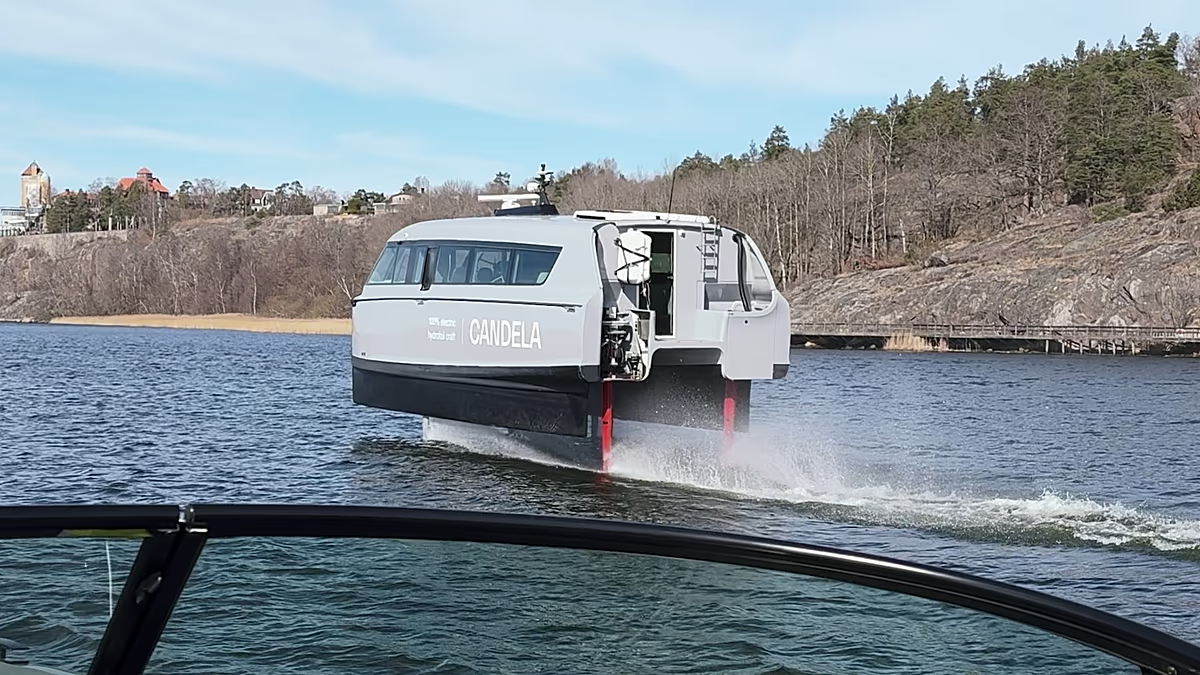



In an era marked by persistent global tensions and regional conflicts, such as the war in Iran, energy security has become a paramount concern for Europe. The volatility of traditional energy markets underscores a pressing need for stability and self-reliance. Consequently, renewable energy sources have surged back into the strategic spotlight, not merely as environmental imperatives but as foundational pillars for Europe’s energy independence. This shift is not theoretical; it is already unfolding across the continent. Recent data from Eurostat reveals that renewables now account for nearly half of the bloc’s energy usage, with nations like Austria and Sweden leading the way, meeting an astonishing 90% of their energy needs through clean sources. While wind and hydropower remain the dominant contributors, the most dynamic story is found in solar energy. Its meteoric rise from a mere 1% share in 2008 to over 23% in 2024 illustrates a transformative adoption, with experts predicting photovoltaics may soon overtake hydropower in total output. This tangible progress paints a picture of a continent actively rewiring its energy infrastructure toward resilience.
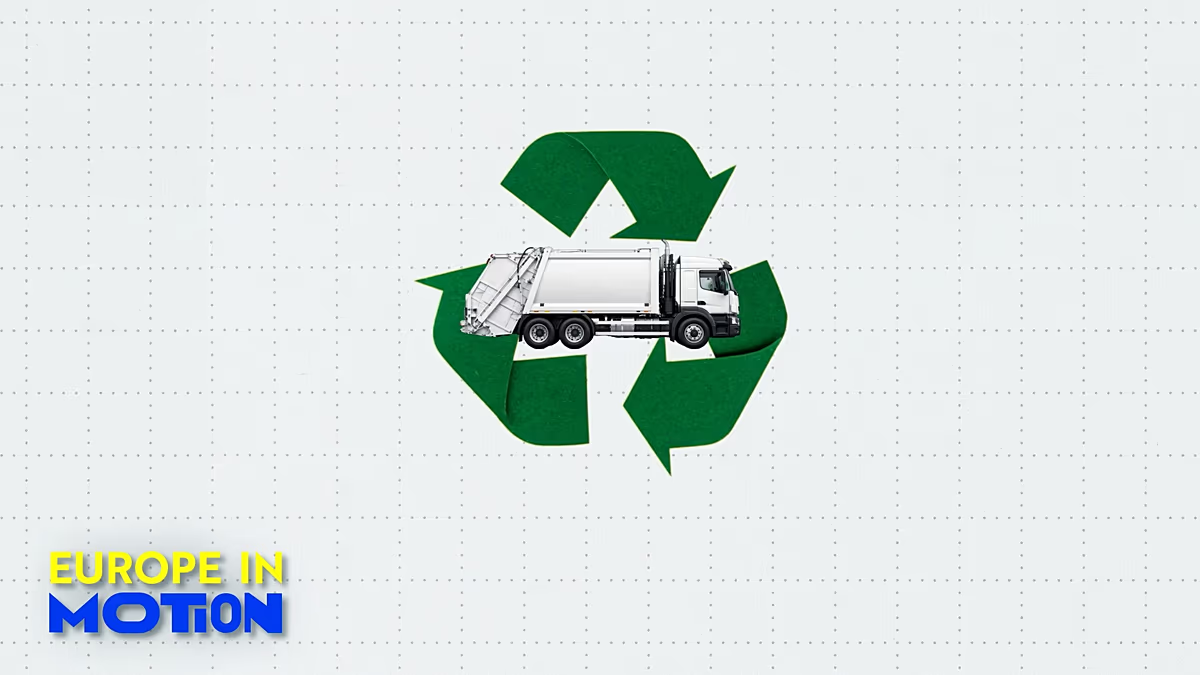
The economic landscape of this green transition is equally compelling, revealing that sustainability and profitability are increasingly aligned. According to Eurostat, the most lucrative sector within the EU’s green economy is not energy production, but waste management. In 2023, this sector generated over €200 billion—a staggering 78% increase in just a decade—and dwarfed the output of other activities like wastewater management and material recovery. It is also the largest employer, providing jobs for nearly one million people across the bloc. This economic vitality signals a profound maturation: the green economy is no longer a niche or a cost center; it is a robust, job-creating engine where circular economy principles, such as recycling and recovery, translate into significant financial value and social benefit. The sector’s growth demonstrates that environmental stewardship can be a core driver of economic strength.
This economic expansion is naturally accompanied by a significant rise in green employment. Overall, jobs in the EU’s green economy have grown by more than two million since 2014, reaching 5.8 million in 2023 with an average annual growth rate of 5.5%. These roles span a diverse spectrum, from direct environmental protection work in forestry and groundwater management to the installation of solar panels and the implementation of building insulation for energy efficiency. Following waste management, the sectors of energy savings and renewable energy production are the next largest employers, each engaging hundreds of thousands of professionals. This diversification highlights that the green transition is creating a multifaceted workforce, integrating traditional roles with new, specialized skill sets. Within this evolving job market, a key strategic role is emerging: the Environmental Lead. This position, though not yet fully quantified in statistics, acts as a crucial connective tissue within organizations, overseeing compliance, auditing emissions, and designing circular economy practices to seamlessly integrate sustainability into core business operations.
However, this impressive trajectory of growth faces a critical juncture and new political headwinds. The green economy has expanded steadily since 2014, with an average annual output increase of nearly 8%, culminating in a total generation of €1.33 trillion in 2023. Yet, the political momentum that propelled much of this progress appears to be shifting. The 2024 European elections resulted in a setback for Green parties and a rise in more conservative factions, whose platforms often prioritize economic competitiveness and regulatory simplification over stringent environmental mandates. This shift has manifested in concrete policy moves. In February 2025, the EU Commission introduced the “Omnibus I” package, aimed at reducing administrative burdens for businesses, particularly around environmental requirements—a move critics have labeled as deregulation disguised as simplification. Additionally, negotiations on the pivotal Green Claims Directive, intended to combat greenwashing, were suspended, while proposals on pesticide reduction were shelved and the Nature Restoration Law was diluted following widespread farmer protests.
These developments pose a fundamental question: can the green economy continue its robust expansion without the strong political tailwinds of the past decade? The concern is that a regulatory pause or rollback might stifle innovation, slow investment, and undermine the long-term frameworks necessary for sustained growth. The risk is not merely environmental; it is also economic. The sectors currently driving output and employment—from waste management to solar energy—have flourished within a policy environment that provided clear signals and standards. A perceived retreat from these ambitions could create uncertainty for businesses and investors who have committed capital and strategy to the green transition.
Ultimately, Europe stands at a crossroads. The data paints an unambiguous picture of success: renewables are securing energy independence, the green economy is a trillion-euro, job-creating powerhouse, and societal integration of sustainability is deepening through new professional roles. Yet, this tangible progress now intersects with a changing political climate that seems to favor deregulation and competitiveness. The path forward will depend on whether European institutions and member states can forge a new consensus—one that recognizes that environmental sustainability and economic competitiveness are not opposites, but inseparable partners in building a resilient, independent, and prosperous future for the continent. The achievements of the last decade provide a solid foundation, but their continuation requires a renewed, pragmatic commitment to integrating green growth into the core of Europe’s strategic identity.