


Titled “Addressing the Fertilizer Crisis: EU’s Strategic Shift Towards Food Security and Green Agriculture”
In a significant move that bridges the urgent concerns of farmers with the long-term imperatives of climate policy, the European Commission is crafting a plan to financially support its agricultural sector using a novel source: carbon taxes. A leaked draft proposal, as reported by Euronews, outlines a strategy where revenues collected from heavy industry under the EU’s Emissions Trading System (ETS) would be partially diverted to help farmers transition away from expensive, fossil-fuel-based fertilizers. This initiative, expected to be formally unveiled, acknowledges a perfect storm buffeting European agriculture: the crippling cost of synthetic fertilizers, deeply entangled with global geopolitics and energy markets, now directly threatens both food security and the livelihoods of farmers across the continent.
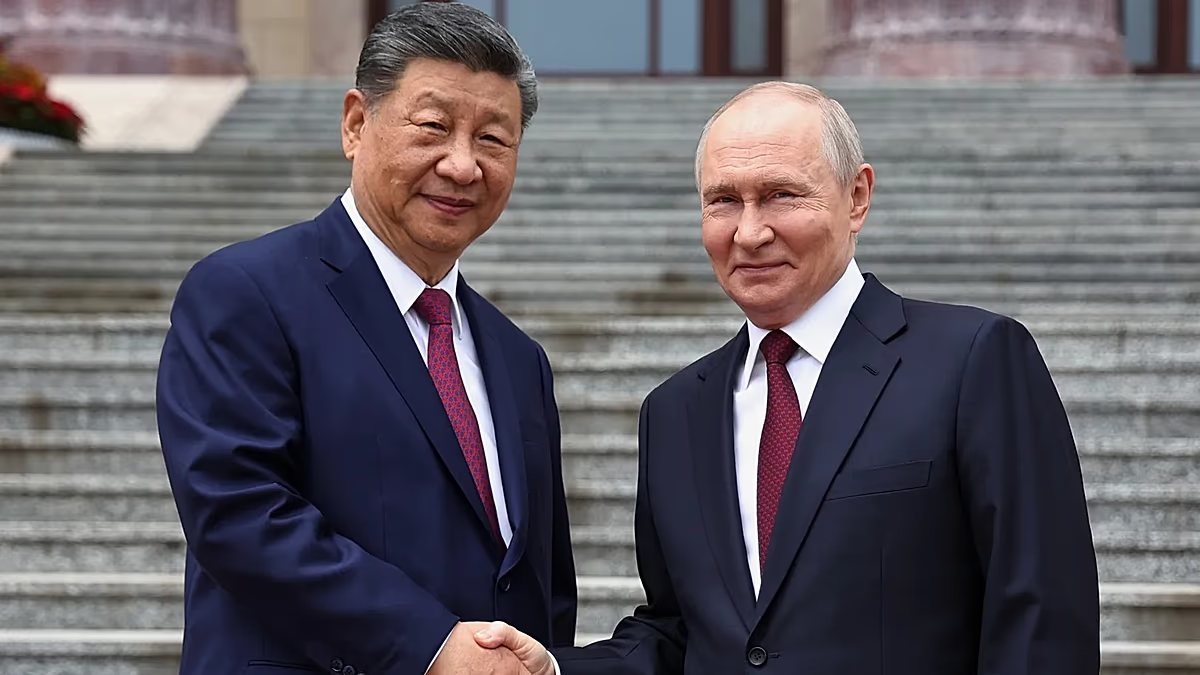
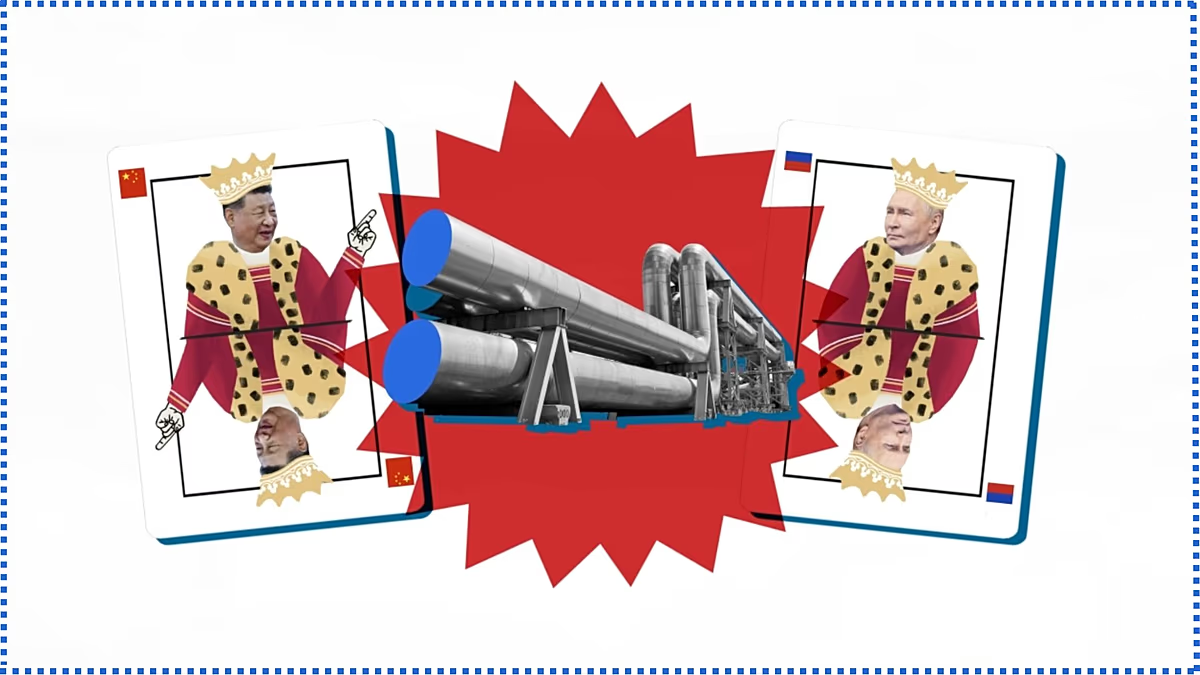
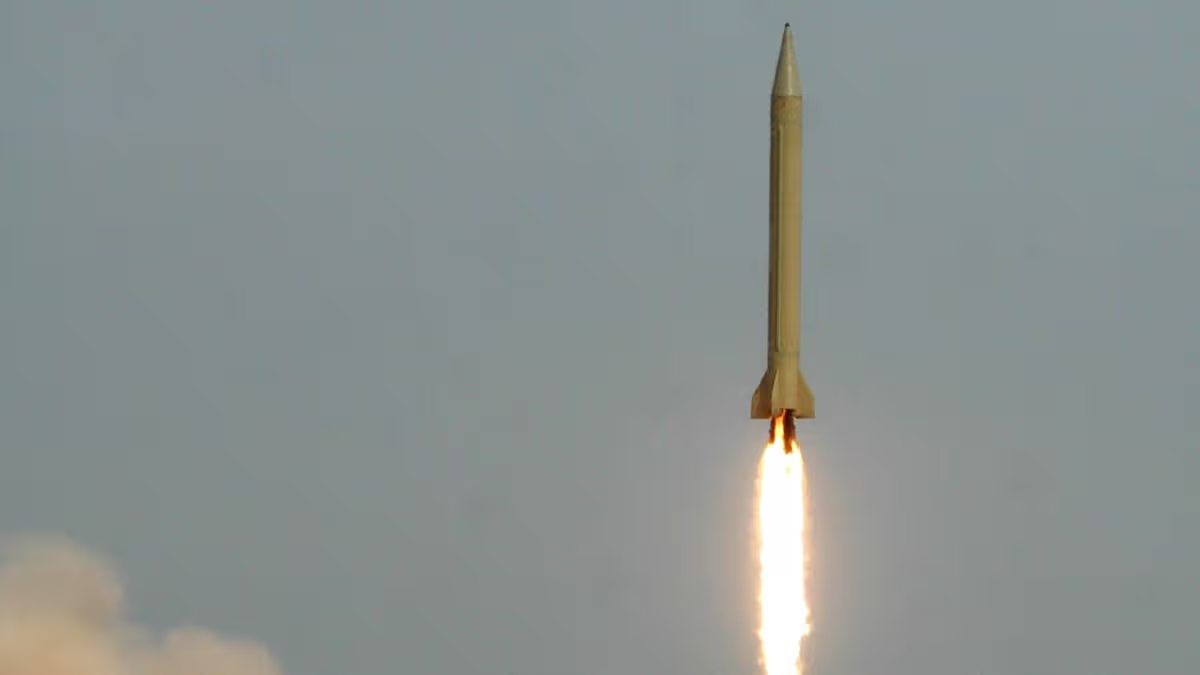
The root of the crisis lies in the very chemistry of modern farming. Nitrogen fertilizer production is intensely energy-dependent, with natural gas constituting up to 80% of its cost. This has made the sector acutely vulnerable to the seismic shocks in global energy markets following Russia’s invasion of Ukraine and ongoing instability in the Middle East, particularly disruptions near the critical Strait of Hormuz. Compounding this market pressure are the EU’s own geopolitical decisions, notably the 50% tariffs imposed on Russian and Belarusian fertilizers. Prior to these tariffs, nations like Poland, France, and Germany relied on Russia for nearly a third of their imports. The cumulative effect has been soaring costs at the farm gate, fueling widespread protests and contributing to inflationary pressures on food for all European consumers.
The Commission’s proposed solution is politically and economically nuanced. It involves creating a “targeted financial support mechanism” to channel ETS revenues—funds paid by industries for their carbon pollution—directly to farmers. This aims to accelerate the adoption of bio-based, circular, and low-carbon fertilizers. However, this redistribution is likely to provoke controversy. Energy-intensive industries, which bear the direct cost of the ETS, may question the fairness of seeing their payments used to subsidize a sector that itself remains exempt from the carbon market. In a parallel effort to ease the burden, the Commission is also considering slowing the phase-out of free ETS allowances for the fertilizer production sector itself, a move estimated to generate an additional €4 billion, but on the condition that the industry invests heavily in sustainable alternatives.
This strategy is not merely a short-term subsidy; it is envisioned as a cornerstone of a broader industrial and geopolitical realignment. The draft document reveals ambitions to build “green ammonia corridors” with partners in Africa and the Middle East, diversifying supply chains and reducing dependencies. Furthermore, the EU is considering leveraging its new Carbon Border Adjustment Mechanism (CBAM)—the tariff on high-emission imports—to protect its farmers from being undercut by cheaper, polluting fertilizer produced elsewhere. This complex interplay of the ETS and CBAM underscores how fertilizer policy is now intrinsically linked to Europe’s quest for strategic autonomy. The Commission is also exploring tools like carbon Contracts for Difference and strategic stockpiling to actively create a “lead market” for green fertilizers, signaling a committed, state-backed push for technological transition.
Unsurprisingly, this approach has ignited a vigorous debate about the future of European agriculture. A coalition of environmental NGOs has applauded the focus on moving away from fossil-fuel dependencies but urges the Commission to go much further. In an open letter, groups like the Center for International Environmental Law argue that the plan must be a definitive “turning point” towards fully scaled “agroecological solutions.” They emphasize that the vulnerabilities extend beyond cost and supply, highlighting the severe environmental toll of conventional fertilizers: from water pollution and eutrophication that devastates aquatic ecosystems, to soil degradation and significant emissions of nitrous oxide, a potent greenhouse gas. For them, true resilience lies not in tweaking the existing system, but in a systemic transformation of food production.
Ultimately, the leaked draft reveals the European Commission walking a tightrope. It must provide immediate, tangible relief to a farming community in distress while steering the entire agricultural sector toward a more sustainable and sovereign future. The proposal attempts to balance these needs by using the financial tools of climate policy to underwrite an agricultural transition. Whether this will be seen as a coherent blueprint for a greener, more resilient Europe, or as a contentious redistribution that pits industry against agriculture, remains to be seen. The final proposal, and the political reaction to it, will be a crucial test of the EU’s ability to harmonize its economic, environmental, and security priorities in an increasingly volatile world.