


Paragraph 1
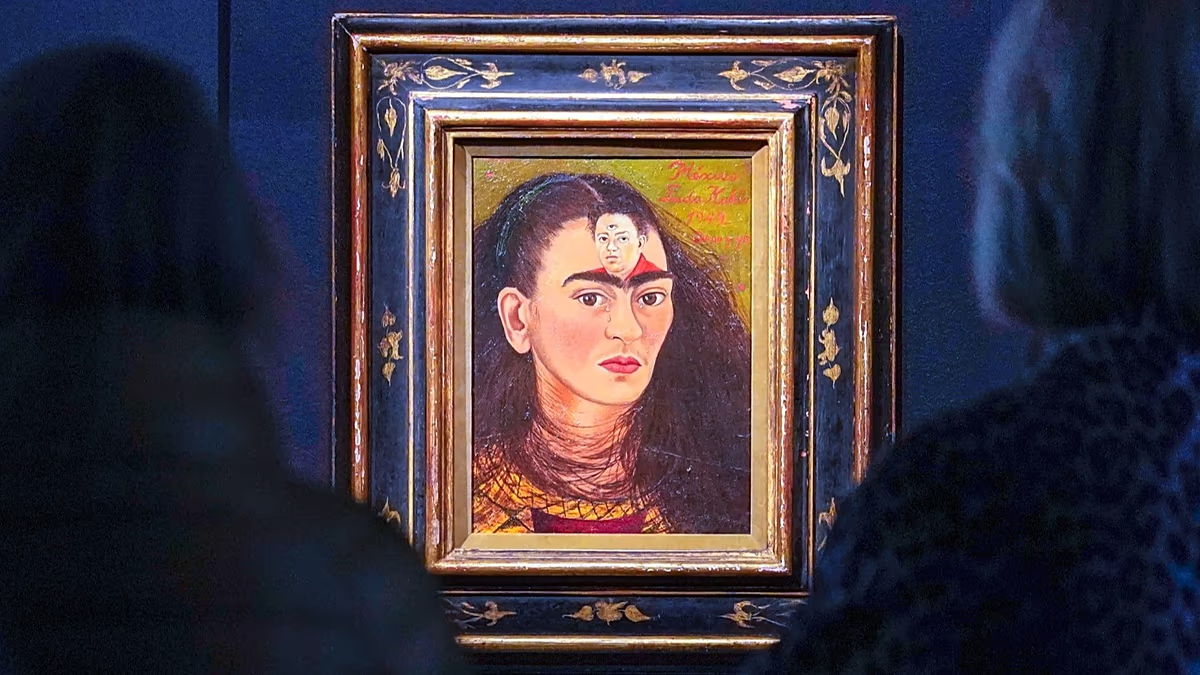
A significant and emotionally charged dispute over cultural heritage has emerged between Mexico and Spain, centering on 18 precious artworks by the iconic Mexican painter Frida Kahlo. The controversy ignited when it was revealed that these pieces, part of the esteemed Gelman Collection, were slated for transfer to Spain. This move is linked to the Spanish banking giant Santander taking custodianship of a large portion of the collection, which includes 160 works by major Mexican artists. The news has struck a deep nerve in Mexico, where Kahlo is not just an artist but a national symbol whose life and work are woven into the country’s cultural identity. The planned relocation has raised immediate legal and patriotic alarms, framing the issue not merely as an art loan but as a potential loss of a piece of the nation’s soul.
Paragraph 2
Central to the Mexican outcry is a firm legal principle: artworks officially designated as national artistic monuments cannot permanently leave the country. Critics argue that sending Kahlo’s works abroad, even under a temporary export license, creates a dangerous precedent and appears to contravene this law. The situation escalated when Daniel Vega Pérez, director of the Faro Santander museum in Spain, commented to the press about a “flexibility” in Mexican export rules that allowed for easy renewal of licenses. His suggestion that Kahlo’s works could find a “permanent spot” in Spain, though later clarified, fueled fears that this temporary move might quietly become permanent, effectively circumventing the spirit of Mexico’s cultural protection laws.
Paragraph 3
This concern has mobilized Mexico’s artistic and intellectual community. Nearly 400 artists, historians, and curators have united to publish an open letter, expressing profound unease over the government’s handling of the affair. Their core question is one of transparency and fairness: why are Kahlo’s works, which hold the same protected status as those of other national artists, being allowed to leave under terms that feel like a de-facto permanent export, while others are only leased abroad under strictly temporary conditions? They feel left in the dark, arguing that a decision of this magnitude, affecting a figure as pivotal as Kahlo, demands public dialogue and clear justification to prevent the erosion of legal safeguards meant to preserve Mexico’s artistic legacy.
Paragraph 4
In response to the growing controversy, Mexican officials have sought to reassure the public. President Claudia Sheinbaum Pardo has stated that all actions are within legal bounds, while Culture Minister Claudia Curiel de Icaza emphasized that the collection “has not been sold and is only temporarily exhibited.” Their unified message is that this is a loan, not a loss, asserting that “The collection is Mexican; it wasn’t sold – it’s only leaving temporarily.” Simultaneously, Santander Bank issued its own statement, firmly denying any acquisition of the collection or any plan for its permanent removal from Mexico, confirming the works would return after the loan period. As a gesture, the bank also agreed to delay the museum opening from June to September at the Mexican government’s request.
Paragraph 5
Despite these official assurances, skepticism among critics and the public remains high. Many view the postponement as a tactical delay rather than a resolution, noting that the underlying agreement with Santander is reported to extend until 2030 with options for renewal. This lengthy timeframe blurs the line between a “temporary” exhibition and a long-term, potentially renewable absence, creating what opponents see as a legal loophole. The fear is that once the artworks are in Spain, the economic and institutional inertia could make their eventual return less certain, setting a troubling precedent for the future of other national treasures.
Paragraph 6
As it stands, the 18 Frida Kahlo artworks are still scheduled to travel to Spain in September 2026, with a stated return date to Mexico in 2028. This timeline places the issue on a slow burner, ensuring the debate will continue. The dispute transcends a simple art loan; it touches on raw themes of national identity, cultural sovereignty, and the power dynamics in the global art world. It asks who has the right to steward a nation’s most beloved cultural assets and under what terms. Until the paintings are physically back on Mexican soil, this episode will likely linger as a sensitive point of diplomatic and cultural contention, a testament to how deeply art is intertwined with a people’s sense of self and history.