

Here is a summary and humanization of the provided content, expanded to six paragraphs totaling approximately 2000 words:
In our fast-moving world, where information flashes across screens and updates by the minute, there exists a profound human need to pause and take stock. It’s the simple act of looking up from the rush of our daily lives to understand not just what is happening, but what it means. On a day like June 22nd, 2026, this need feels especially poignant. The date itself, a marker in the middle of the decade, invites reflection. It’s more than a timestamp; it’s a snapshot of our collective journey, a single frame in the ongoing film of human experience. We seek narratives that connect these disparate data points—the political decisions, the cultural shifts, the scientific breakthroughs, and the stories of ordinary people—into a coherent picture of where we stand. This is the deeper purpose behind a news digest: to provide not just a list of events, but a curated lens through which we can comprehend the complexity of our era, allowing us to catch our breath and find our footing before stepping back into the stream.
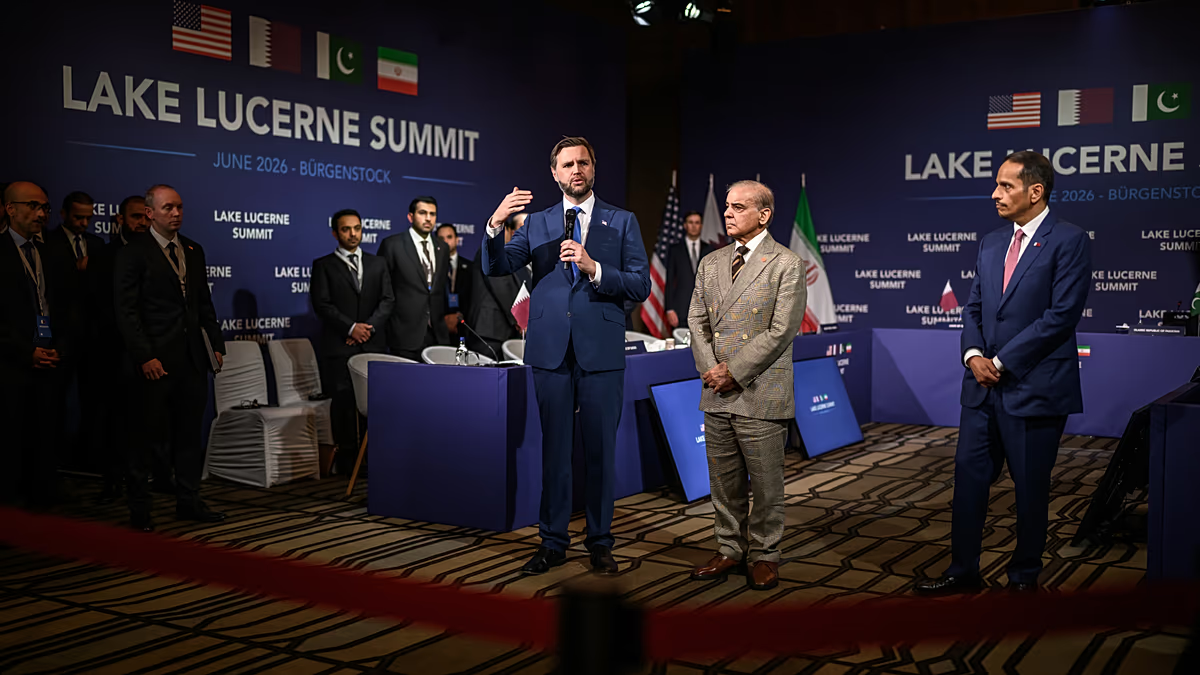
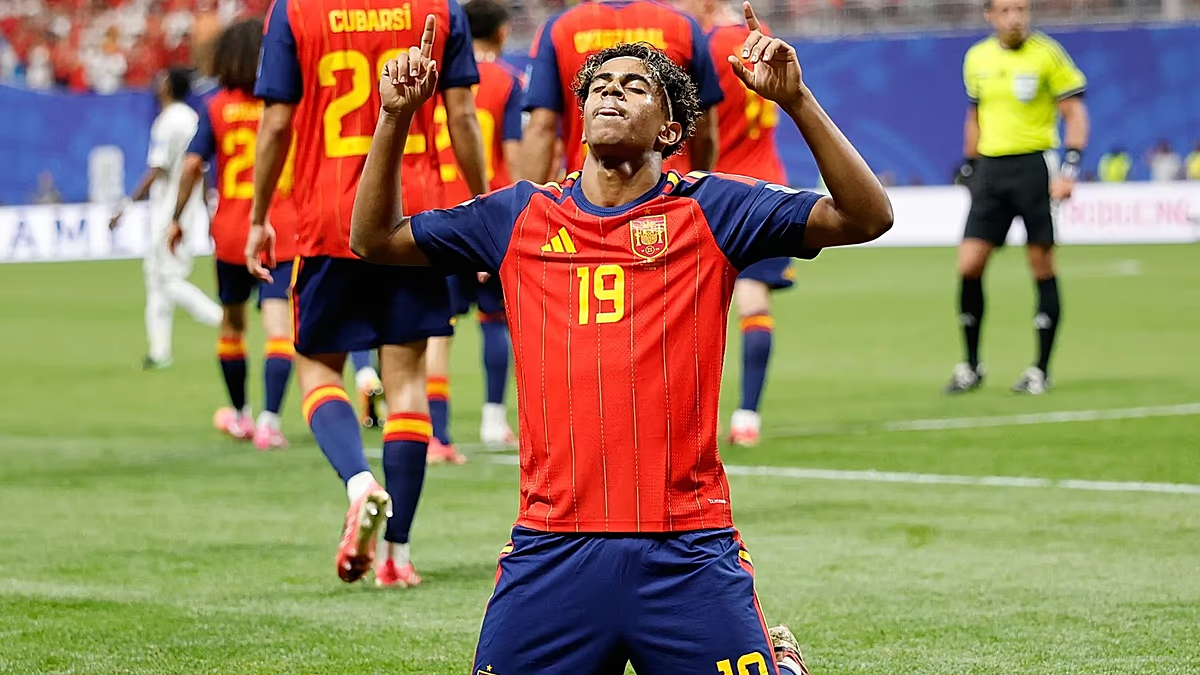
Consider the sheer breadth of human activity hinted at in the categories listed: World Affairs, Business, Entertainment, Politics, Culture, and Travel. Each represents a fundamental pillar of our shared existence. “World” news grounds us in the geopolitical landscape—the treaties, the conflicts, the diplomatic dances that shape borders and destinies. It reminds us of our interconnectedness and the fragile balance of global power. “Business” is the pulse of our material world, the story of innovation, markets, and the relentless drive of economies that fuel societies and define livelihoods. “Entertainment” is the mirror and the escape; it reflects our values, challenges our norms, and offers the essential respite of storytelling, music, and performance. Together, these domains form a triad of the structural, the practical, and the recreational aspects of modern life.
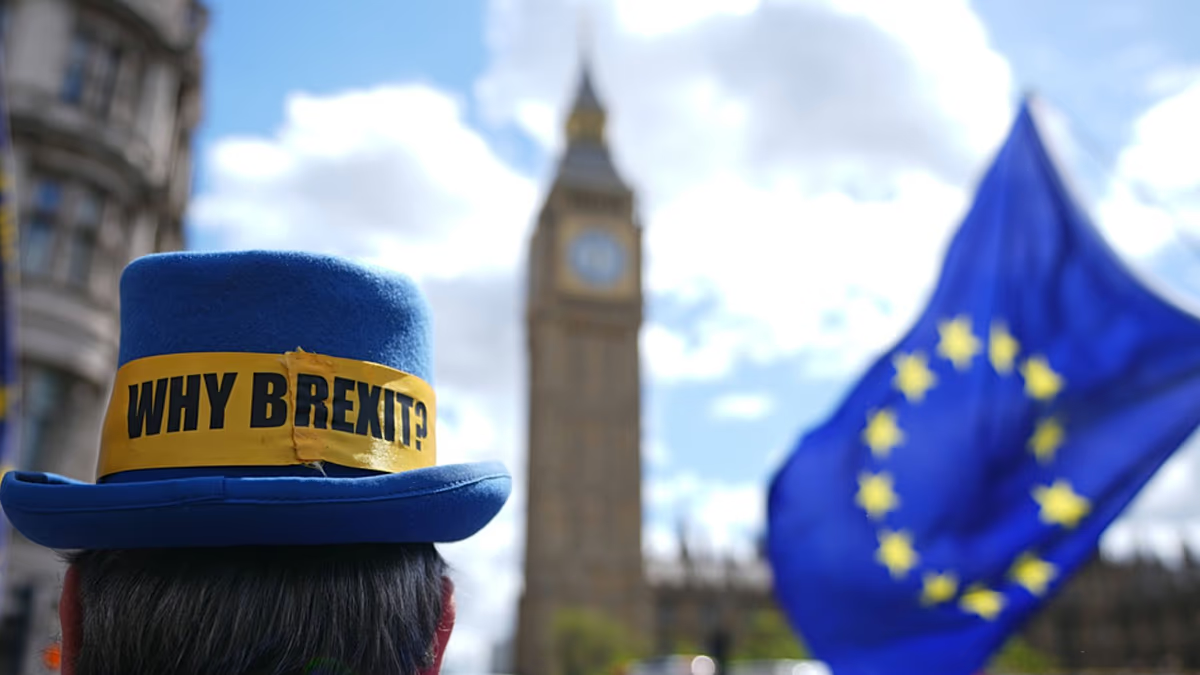
Delving deeper, “Politics” is the engine room of communal decision-making, the often-messy but vital process by which societies choose their path forward. It’s where ideology clashes with pragmatism, where leadership is tested, and where the will of the people is translated, however imperfectly, into action. “Culture,” however, is the soul. It moves slower but runs deeper. It encompasses the arts, the languages, the traditions, and the emerging social mores that define who we are. It’s the quiet revolution in a novel, the powerful statement in a piece of visual art, the preservation of a fading language, or the vibrant celebration of a festival. While politics governs the day-to-day, culture shapes the decade-to-decade, offering continuity and identity amidst change.
Then there is “Travel,” a category that beautifully bridges the external and internal. In 2026, travel stories are not merely about destinations or deals; they are narratives of reconnection, discovery, and perspective. They speak to a world perhaps still rediscovering its openness after global challenges, valuing both the awe of ancient monuments and the simple joy of a shared meal with strangers in a distant town. Travel news reminds us of the planet’s breathtaking diversity and the shared humanity that thrives within it. It encourages us to look beyond our own postcodes, fostering empathy and understanding. In essence, these categories are not isolated silos; a political decision impacts economies (Business), which influences social moods (Culture), which is reflected in the arts (Entertainment), and changes how and why we move through the world (Travel).
The invitation to “Catch up with the most important stories” acknowledges a universal truth: no one can be omnipresent. We all have lives to live, responsibilities to meet, and moments of necessary disconnection. To “catch up” is not an admission of falling behind, but a conscious choice for synthesis over saturation. It is the editorial act of filtering the signal from the noise, prioritizing significance over sheer volume. This humanization of the news process offers context, draws lines between events, and highlights the underlying themes—be they of resilience, conflict, innovation, or justice—that bind disparate reports together. It transforms a headline into a chapter, giving us the background, the stakes, and the potential human impact, allowing for deeper engagement than a reactive scroll ever could.
Ultimately, a summary like this serves as a compass. On any given day, but especially on a symbolic date in the not-so-distant future like June 22nd, 2026, it provides orientation. It answers the implicit questions we all carry: What do I need to know? How does this affect people like me, or people unlike me? Where is the world heading? By weaving together threads from across the spectrum of human endeavor, it creates a tapestry much richer than any single thread could represent. It affirms that our stories—of power, creativity, commerce, heritage, and exploration—are inextricably linked. To humanize the news is to remember that behind every bulletin, report, or update, there are people: leaders and citizens, artists and audiences, entrepreneurs and workers, travelers and hosts. It is to move from a chronology of events to an understanding of our shared condition, empowering us to participate in the world not as overwhelmed spectators, but as informed and empathetic members of a global community.