

Paragraph 1: The Verdict and the Crime
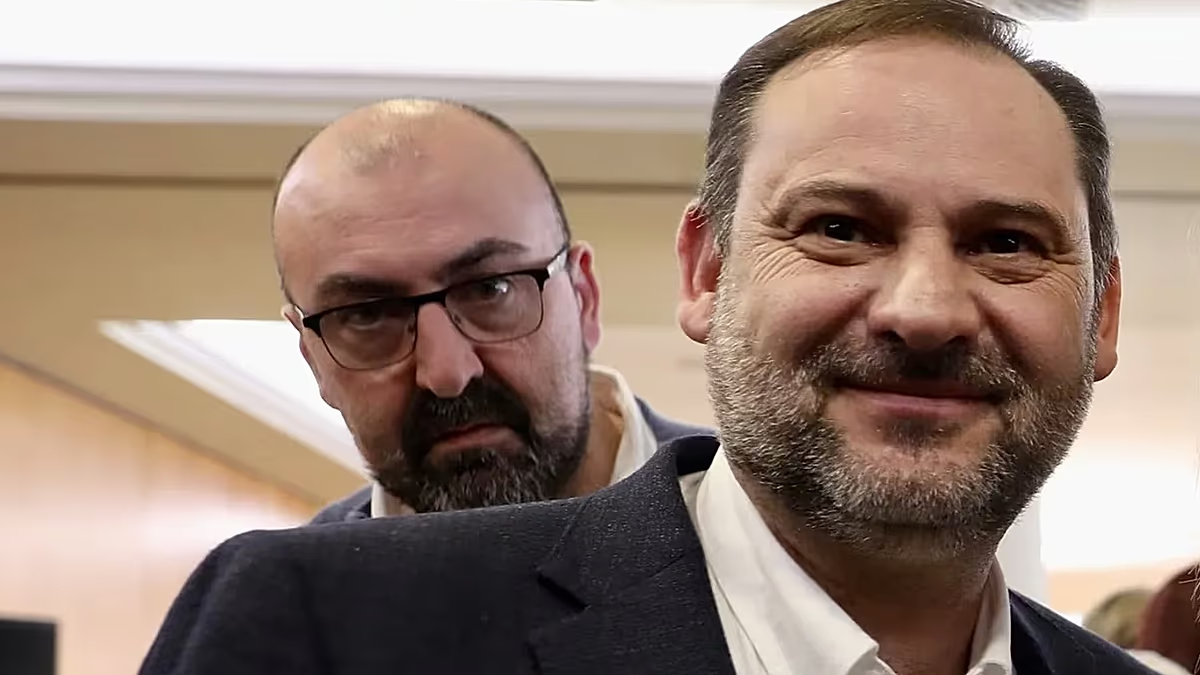
Spain’s political landscape has been rocked by a landmark Supreme Court ruling that sends a powerful message about accountability. Former Transport Minister José Luis Ábalos, once a central pillar of Prime Minister Pedro Sánchez’s inner circle, has been sentenced to 24 years in prison. His former aide, Koldo García, received 19 years, and businessman Víctor de Aldama was sentenced to four and a half years. The seven-judge panel unanimously convicted the trio for operating a criminal organisation that orchestrated a brazen corruption scheme. Their crime? Exploiting the dire urgency of the COVID-19 pandemic for personal profit, specifically through rigging the award of contracts for millions of face masks to state-owned companies.
Paragraph 2: The Mechanics of the Corruption
The scheme was not a simple backroom deal but a structured operation with clearly assigned roles, capitalising on the national panic of early 2020. The court found that the group manipulated the contracting process for 13 million masks destined for key state entities like Puertos del Estado and Adif, using Aldama’s company as a conduit. In return for wielding his ministerial influence, Ábalos was allegedly rewarded with a systematic flow of benefits. This included a regular monthly stipend of €10,000 for his “fixed expenses,” the covering of housing costs for an associate, and even securing jobs for two women linked to him at publicly-owned companies under his ministry’s purview.
Paragraph 3: A Web of Personal Gain
The corruption extended beyond cash payments, weaving itself into the very fabric of the defendants’ personal lives through lucrative real-estate arrangements. Judges uncovered a complex web of property deals designed to funnel value to Ábalos. This included a rent-to-buy agreement with Aldama for a Madrid property, alongside similar arrangements for homes in the coastal towns of Marbella and La Línea de la Concepción. The court directly connected these tangible assets to specific official acts, such as actions related to the government-backed rescue of airline Air Europa and the granting of a hydrocarbons licence, painting a picture of influence traded for personal enrichment.
Paragraph 4: A Deep Political Wound for Sánchez
While Prime Minister Pedro Sánchez was not implicated in the case, the verdict strikes at the heart of his government and his party. José Luis Ábalos was far more than a cabinet colleague; he was a longtime confidant and a key architect of Sánchez’s rise, having served as the PSOE’s powerful organisational secretary. This conviction is the first final sentence against such a high-ranking former member of Sánchez’s administration, transforming it from a political headache into a profound embarrassment. It delivers a severe blow to the government’s credibility and offers the opposition a potent symbol of alleged systemic failure within the Socialist ranks.
Paragraph 5: Intensifying the Political Storm
The ruling arrives at a time of heightened vulnerability for Sánchez, who is already facing a barrage of criticism over several other, unrelated corruption investigations involving his political and personal circle. Although these cases are distinct and Sánchez himself has not been accused, the Ábalos conviction amplifies the opposition’s narrative of a government mired in scandal. It provides fresh, high-octane fuel for calls that the Prime Minister must take political responsibility for the conduct of those he empowered. The Supreme Court’s decision ensures that questions of governance and ethical standards will dominate the political discourse for the foreseeable future.
Paragraph 6: The Lasting Stain of Pandemic Profiteering
Ultimately, this case transcends the fate of three individuals; it becomes a grim chapter in Spain’s pandemic history. It reveals how the unprecedented crisis, which demanded unity and transparent action, was perverted by some in power for private gain. The sentence attempts to deliver justice for the betrayal of public trust during a national emergency. However, the political and social repercussions will linger long after the prison terms begin. The scandal leaves a lasting stain on the political establishment, reminding citizens of the corrosive cost of corruption, especially when it preys upon collective fear and vulnerability.