


Paragraph 1
Portugal experienced a nationwide standstill this Wednesday as a 24-hour general strike, called by major unions in protest against proposed labour law reforms, brought public life to a grinding halt. The coordinated action saw workers from sectors including railways, metro systems, schools, hospitals, and municipal services down tools, demonstrating the deep and widespread discontent with the government’s agenda. Commuters across the country awoke to a day of severe disruption, facing shuttered stations, cancelled trains, and silent buses. The strike was not a mere transport stoppage but a profound expression of social unease, echoing through empty classrooms, under-staffed medical facilities, and uncollected rubbish bins, painting a vivid picture of a nation’s core services in deliberate pause.
Paragraph 2
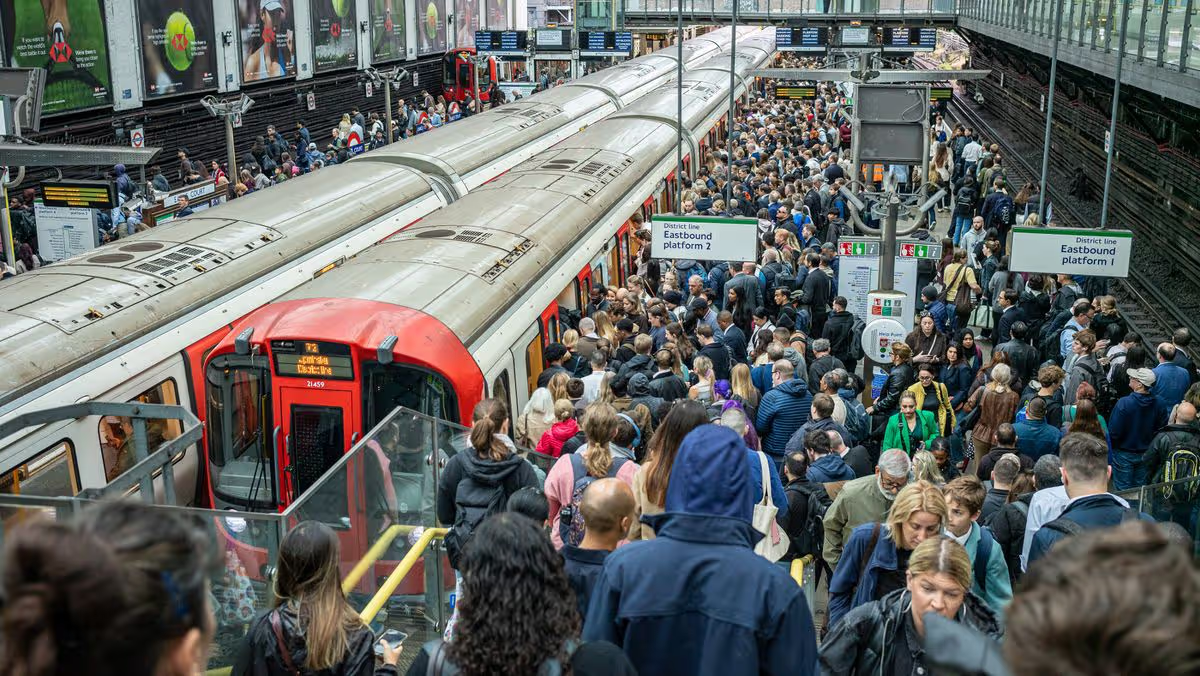
In the capital, Lisbon, the impact was particularly stark. The city’s normally bustling metro network fell silent, with stations locked and entrances barred. Major railway hubs like Santa Apolónia and Oriente displayed electronic boards filled with cancellations, leaving travellers stranded on concourses. The familiar morning rhythm of the city was replaced by an unusual quiet, broken only by the increased congestion on roads as people scrambled for scarce taxis or attempted long walks to work. The strike’s reach extended into the skies, with hundreds of flights grounded at airports, compounding the travel chaos and signaling the action’s significant economic and logistical footprint. For many citizens, the day became an exercise in patience and adaptation, a tangible reminder of the essential services usually taken for granted.
Paragraph 3
This large-scale industrial action represents a critical and escalating challenge for Prime Minister Luís Montenegro’s relatively new centre-right government. The strike is the culmination of months of strained negotiations between the administration and union representatives, talks which ultimately failed to bridge the gap on contentious proposed reforms. The government argues that changes to labour laws are necessary to modernize the economy and boost productivity. However, unions and the workers they represent fear the proposals will erode hard-won rights, leading to weaker job security, diminished collective bargaining power, and a precarious work environment. Wednesday’s strike was, therefore, less a sudden outburst and more a decisive move in a protracted political struggle over the future direction of Portugal’s workforce.
Paragraph 4
Beyond the immediate travel chaos, the strike’s human impact resonated in communities nationwide. Parents juggled work commitments with unexpected childcare duties as schools closed or operated minimally. Patients faced postponed medical appointments and procedures, adding stress to an already strained national health system. The suspension of waste collection services served as a visible, daily reminder of the strike’s breadth. This widespread participation underscores that the grievances are felt not by a single profession, but by a broad cross-section of public sector and service workers who feel their stability and rights are under threat. The empty trains and closed stations were powerful symbols, but the true weight of the strike was felt in the countless personal disruptions and the collective message they sent.
Paragraph 5
The success of the strike in paralyzing key infrastructure places the government in a difficult position. It demonstrates the substantial mobilizing power of the unions and reveals the depth of public sector resistance to the proposed reforms. For the administration, the challenge is now twofold: to manage the immediate fallout and public frustration over the disruption, and to navigate a path forward on its policy agenda. It can either dig in, risking further and potentially more severe industrial action, or seek a return to negotiations with a more conciliatory approach. The strike has forcefully injected the voices and concerns of workers into the centre of the national political conversation, ensuring that any further progress on labour reform cannot be made without their staunch opposition being a primary factor.
Paragraph 6
As Portugal’s streets slowly returned to normal on Thursday, with metro trains running and rubbish being collected, the underlying tensions remain far from resolved. The 24-hour strike was a dramatic event, but it is a symptom of a deeper debate about fairness, security, and dignity in the Portuguese workplace. The halted trains and silent stations were a physical manifestation of a societal question: in seeking economic growth and competitiveness, what compromises on worker protections are acceptable? The resounding answer from the unions, given through their powerful demonstration, is “precious few.” The legacy of this day of strike will be measured not in the hours of disruption, but in whether it forces a genuine dialogue that balances economic ambition with the fundamental rights and well-being of the people who keep the country moving every day.