




As the European Union prepares to turn the page on a significant chapter in its history, a major shift in how the bloc manages one of its most complex challenges is about to take full effect. The two-year transition period for the EU’s landmark Pact on Migration and Asylum concludes on June 12, 2026, setting the stage for national governments across the continent to begin implementing a comprehensive new rulebook. This moment represents the culmination of years of intense negotiation and debate, aiming to move beyond the ad-hoc crisis responses that characterized previous years and toward a system built on shared responsibility and order. For citizens, policymakers, and migrants alike, this transition is more than a bureaucratic change; it is an attempt to forge a unified European approach to migration that balances security, humanity, and practical governance, marking a definitive step toward a more cohesive strategy.
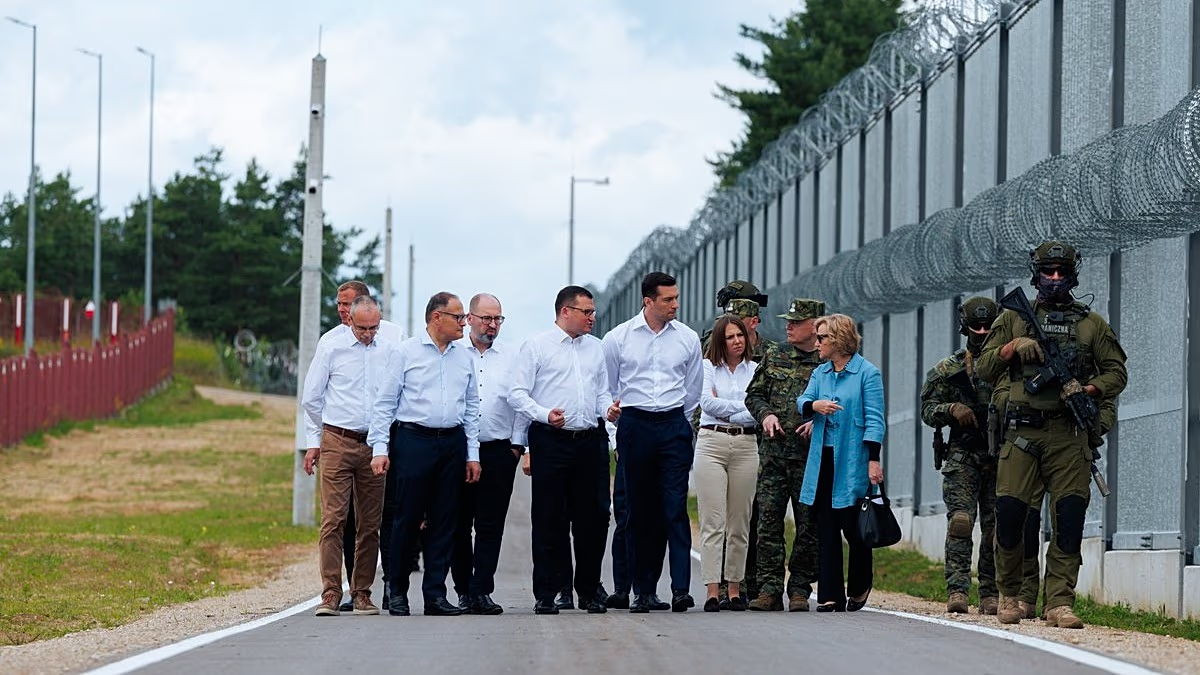
At its heart, the Pact seeks to establish a single, stricter framework that harmonizes policies on migration, asylum, border management, and the integration of newcomers. Its core mission is to create a fairer, more consistent, and ultimately more secure method for handling migration across all member states. This involves a multi-pronged strategy: strengthening the EU’s external borders to manage entries more effectively, setting common asylum procedures to ensure equal treatment no matter where an application is lodged, and guaranteeing a system of burden-sharing so that countries on the frontline, like those in southern Europe, do not carry the responsibility alone. Furthermore, the Pact emphasizes building international partnerships to combat human smuggling and address the root causes of irregular migration, recognizing that a sustainable solution requires engagement beyond Europe’s borders.
The operational blueprint for this new era was detailed in the European Asylum and Migration Management Strategy, presented by the European Commission in January. This strategy outlines the bloc’s vision for the next five years, weaving together measures to prevent illegal immigration with initiatives to attract a new, legal labour force—a dual approach acknowledging both the pressures of irregular arrivals and Europe’s demographic and economic needs. To translate this vast legal framework into reality, a Common Implementation Plan breaks the Pact down into 10 key legislative acts. Among the most significant are the Screening Regulation, which mandates rigorous pre-entry checks for all arrivals at borders; the Return Asylum Procedure Regulation, designed to make asylum decision processes both faster and fairer; and the updated Eurodac Regulation, which will expand a centralized fingerprint database to better track applications and movements.
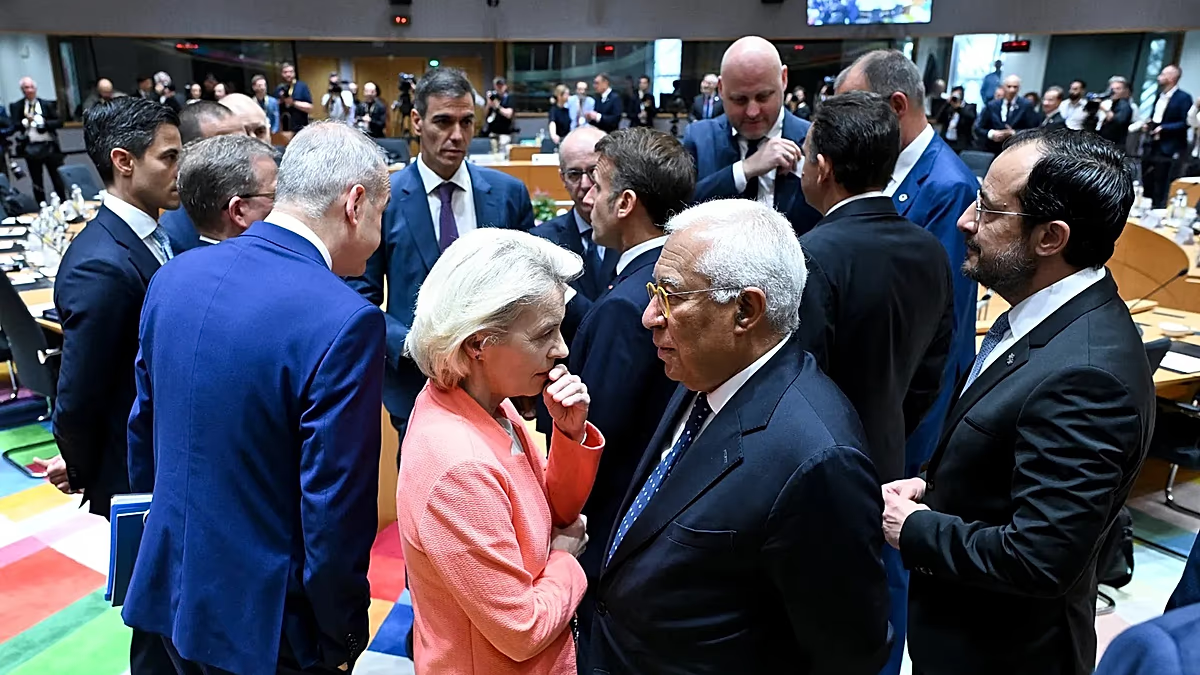
With the June deadline approaching, the European Commission reported in early May that, while some procedural and infrastructure gaps remain, the majority of member states have made substantial progress in adapting their national systems. This preparation is crucial, as the success of the Pact hinges on seamless coordination between 27 different administrations. The financial commitment underpinning this endeavor is equally monumental, with the Commission planning to fund the strategy through the EU’s 2028-2034 budget. This includes an allocation of at least €81 billion dedicated to home affairs policies and the Global Europe instrument, underscoring the long-term investment being made not only in border security but also in fostering stability and opportunity in partner countries to manage migration flows proactively.
The full implementation of this Pact promises to reshape the everyday reality of migration management in Europe. For individuals seeking asylum, it could mean more standardized procedures but also a faster timeline for decisions, reducing prolonged uncertainty. For border communities and national authorities, it aims to replace crisis with predictability through improved cooperation and resource sharing. And for the European project itself, this moment is a critical test of solidarity and operational unity. The coming months will reveal how well the intricate balance between control and compassion, between national sovereignty and collective action, holds in practice.
Ultimately, the EU’s new migration and asylum framework is more than a set of regulations; it is a statement of intent for Europe’s future. As the rules take effect, their true impact will be measured in their ability to protect vulnerable people, secure borders, and foster integration, all while upholding the fundamental values upon which the Union was built. The journey toward a effective and humane migration system is ongoing, and this Pact represents its most structured and ambitious European pathway to date.