


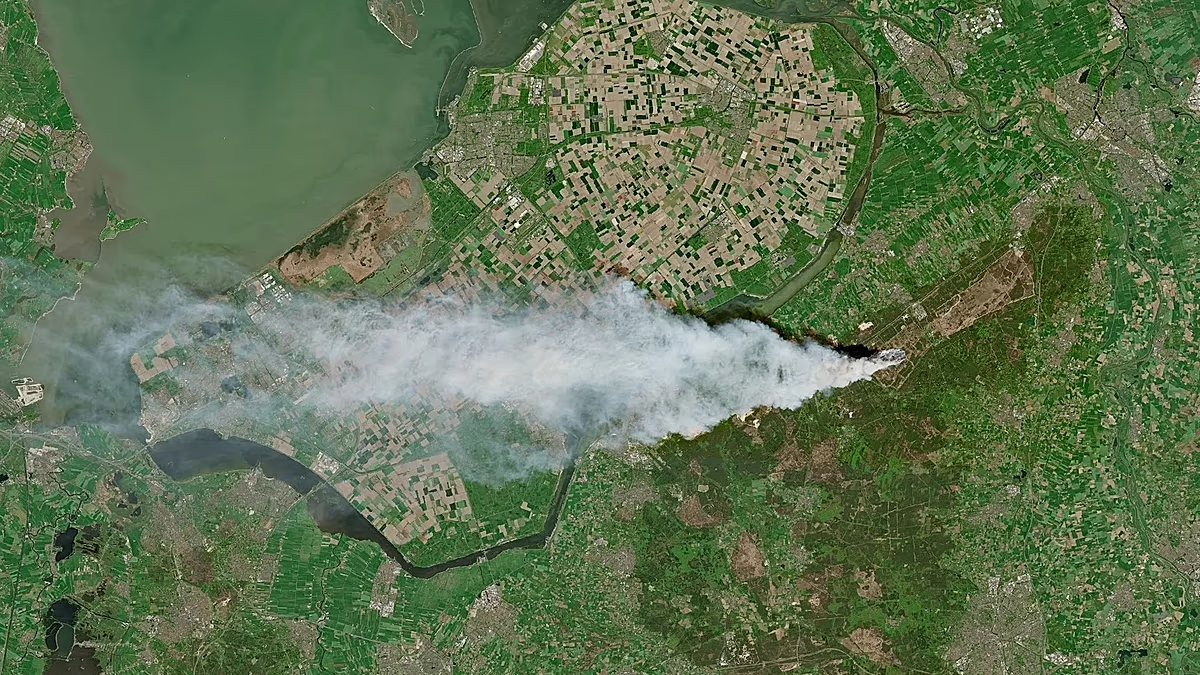
As wildfires erupted across the southern Netherlands, stretching national emergency services to their limit, a powerful symbol of European solidarity unfolded. The blazes, which began midweek, were particularly severe and dangerous, raging through areas that doubled as military training grounds, including an active artillery range. This created a complex and perilous situation for firefighters, who faced the dual challenges of natural combustion and potentially hazardous munitions. With the situation escalating under dry, drought-stricken conditions, Dutch authorities made a crucial decision: to reach out for international support through the European Union’s Civil Protection Mechanism. This system, designed for precisely such crises, swiftly transformed a national emergency into a multinational cooperation effort, underscoring the practical value of regional alliances in times of acute need.
In a rapid and coordinated response, both France and Germany answered the call, deploying specialized firefighting units to aid their neighbor. French Interior Minister Laurent Nuñez detailed their contribution on social media, stating that Paris had sent 41 civil security personnel and 10 vehicles to the front lines. From Germany, the Bonn fire service mobilized an even larger contingent, comprising 67 firefighters, 21 vehicles, and three support trailers. This influx of seasoned personnel and critical equipment provided an immediate and vital reinforcement to the overwhelmed Dutch crews. The collaboration moved beyond diplomatic gestures, becoming a tangible, on-the-ground partnership where French and German firefighters worked shoulder-to-shoulder with their Dutch counterparts against a common threat, demonstrating the human face of European unity.
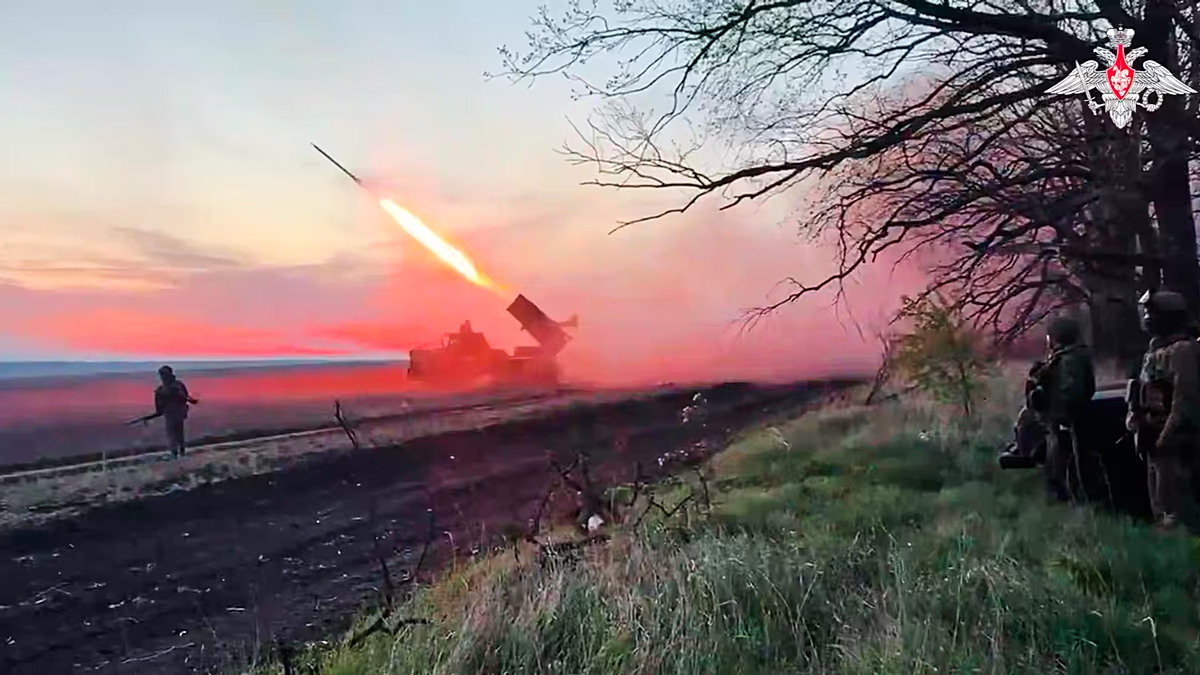
The specific location of the wildfires added a layer of profound complexity and risk. Major Mike Hofman, a Dutch military spokesman, confirmed that several of the fires were burning on active army training grounds. He noted that an official investigation was already underway to determine if there was a direct connection between the ongoing military exercises and the ignition of the blazes. This raised urgent questions about safety protocols and environmental conditions, as the combination of live-fire drills and tinder-dry vegetation created a scenario ripe for disaster. The presence of unexploded ordnance or other military hazards in the burn zones would have necessitated extreme caution, potentially limiting the areas where firefighters could operate safely and complicating their suppression strategies.
Despite the obvious dangers posed by conducting drills in such volatile conditions, the head of the Dutch armed forces stated that military exercises would continue, albeit with enhanced precautions. This decision highlighted the difficult balance nations must often strike between operational readiness and environmental responsibility. The drought parching the country had created a landscape where a single spark could—and apparently did—lead to a conflagration. While the commitment to maintaining training schedules is understandable from a defense perspective, the incident prompted a necessary public examination of the protocols in place to prevent such emergencies. It underscored how climate change, manifesting in prolonged dry spells, is directly increasing the risk of disasters, even in contexts not traditionally associated with wildfires.
The international aid mission, therefore, was about more than just putting out fires; it was a stabilizing intervention during a fraught and sensitive incident. The support from French and German units allowed Dutch authorities to manage the civilian emergency more effectively while simultaneously navigating the delicate investigation into the fires’ origins on military land. This external assistance provided not only manpower but also a measure of political and operational breathing room. The collaboration served as a potent reminder that in our interconnected world, environmental disasters respect no borders, and neither does the imperative to help. The shared effort in the Dutch woodlands became a real-world lesson in collective security, where the threat is not geopolitical but ecological, requiring a response built on shared humanity rather than mere treaty obligations.
In the final analysis, this episode in the Netherlands is a microcosm of 21st-century challenges. It weaves together the escalating threats of climate change, the logistical demands of national security, and the enduring importance of international cooperation. The images of French and German vehicles rolling into a Dutch crisis zone tell a story of practical unity, a direct application of the European ideal in a moment of smoke and flame. As the investigation continues to determine the precise cause, the enduring takeaway is the swift, effective, and compassionate response enabled by the EU’s mechanisms. It reaffirms that when nature unleashes its fury, our greatest strength lies not in isolated effort, but in the willingness to extend a hand—or dispatch a fire engine—across a border to a neighbor in need.