


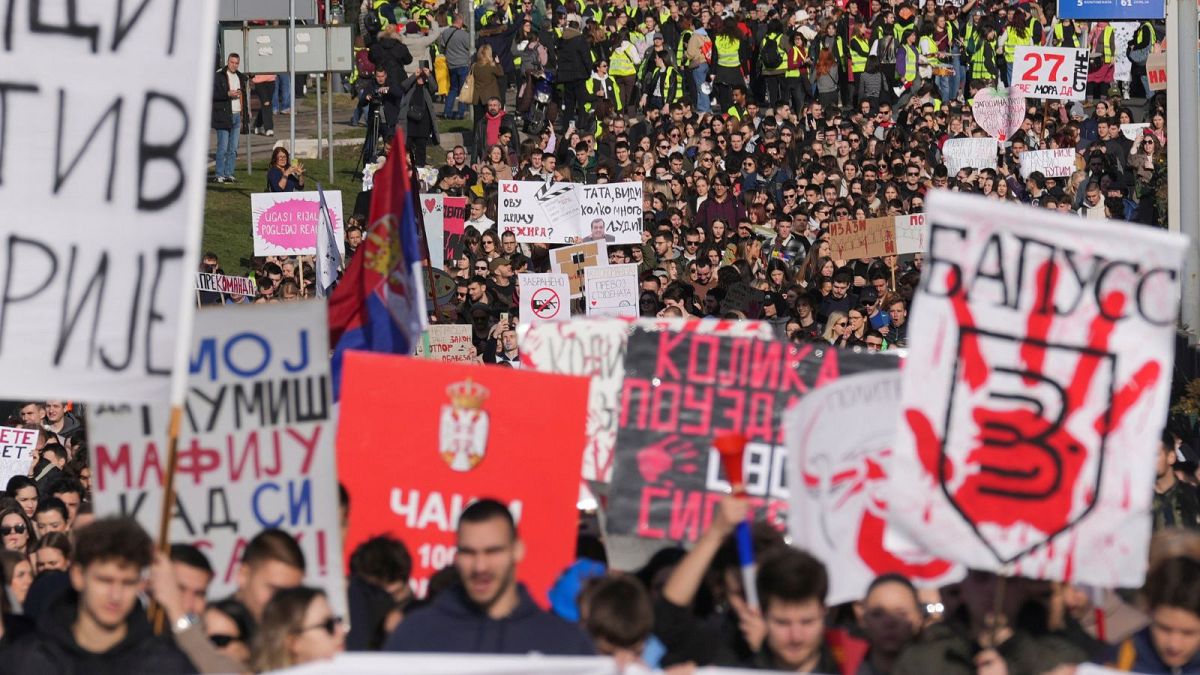
The collapse of a concrete canopy at the Novi Sad train station in Serbia, a tragedy that claimed 15 lives in November, ignited a wave of protests against the government of President Aleksandar Vučić. Public outrage stemmed not only from the loss of life, but also from the widespread belief that the collapse was a direct consequence of shoddy construction work facilitated by government corruption. This incident became a focal point for broader public discontent with Vučić’s administration, which has faced accusations of eroding democratic freedoms despite its stated pursuit of EU membership. The protests, initially sparked by the Novi Sad disaster, evolved into a larger movement challenging the government’s grip on power.
Students emerged as a key force in the demonstrations, organizing street protests and demanding accountability for the tragedy. They initiated a 24-hour blockade of a major Belgrade intersection, significantly escalating pressure on the authorities. This blockade, a bold tactic designed to disrupt daily life and draw attention to their demands, became a symbol of the growing resistance to Vučić’s rule. The students demanded a thorough and impartial investigation into the canopy collapse, the dismissal of charges against protesters arrested during earlier demonstrations, and broader measures to address corruption within the government. Their refusal to engage in dialogue directly with President Vučić, whom they accused of exceeding his constitutional authority, further underscored the deep mistrust between the protesting students and the government.
President Vučić, while acknowledging the need to de-escalate tensions, adopted a two-pronged approach to the crisis. Publicly, he called for dialogue and expressed concern about the economic impact of the ongoing protests. He also announced certain concessions, including the release of documents related to the Novi Sad train station reconstruction and the initiation of criminal proceedings against individuals accused of attacking students and professors during the protests. Furthermore, Vučić offered presidential pardons to protesters facing criminal charges, a gesture aimed at appeasing the demonstrators and reducing the legal pressure they faced.
However, alongside these conciliatory measures, Vučić also employed tactics that critics viewed as attempts to undermine the legitimacy of the protests. He accused the students of being manipulated by foreign agents seeking to destabilize the government, a recurring theme in his responses to dissent. This rhetoric aimed to discredit the protesters and portray them as pawns in a larger geopolitical game, thereby deflecting attention from the core issues of corruption and accountability raised by the demonstrations. Furthermore, the release from detention of former construction minister Goran Vesić, who faced charges related to the canopy collapse, fueled suspicions about the independence and thoroughness of the investigation.
The protests were not without incident. Several confrontations occurred, including instances of drivers ramming into crowds of demonstrators, resulting in injuries. The student blockade in Belgrade, while largely peaceful, was closely monitored by traffic police to prevent further clashes. The atmosphere at the blockade site was a mix of determined activism and somber reflection. Students erected tents, engaged in recreational activities like volleyball, and held a daily 15-minute silence in remembrance of the victims of the Novi Sad tragedy.
The canopy collapse and the subsequent protests exposed deep-seated tensions within Serbian society. While Vučić’s government maintained its grip on power, the demonstrations underscored growing public dissatisfaction with his leadership style and concerns about corruption within state institutions. The students, through their sustained activism and unwavering demands for accountability, emerged as a significant voice of dissent, challenging the narrative presented by the government and pushing for meaningful change. The long-term impact of these protests on Serbia’s political landscape remains to be seen, but the events surrounding the Novi Sad tragedy have undoubtedly left an indelible mark on the country’s political discourse.