


In the opening months of 2026, the Iranian judiciary has initiated a severe new wave of state executions, swiftly carrying out death sentences for offenses linked to protest and international conflict. This punitive campaign underscores the state’s unwavering determination to quell dissent through its ultimate power, even as it draws renewed condemnation from international human rights bodies. The cases, emerging from both recent economic unrest and the lingering fallout from the 2022 protest movement, reveal a pattern of expedited trials, opaque judicial processes, and charges that carry the gravest of penalties for actions deemed threatening to the ruling establishment.
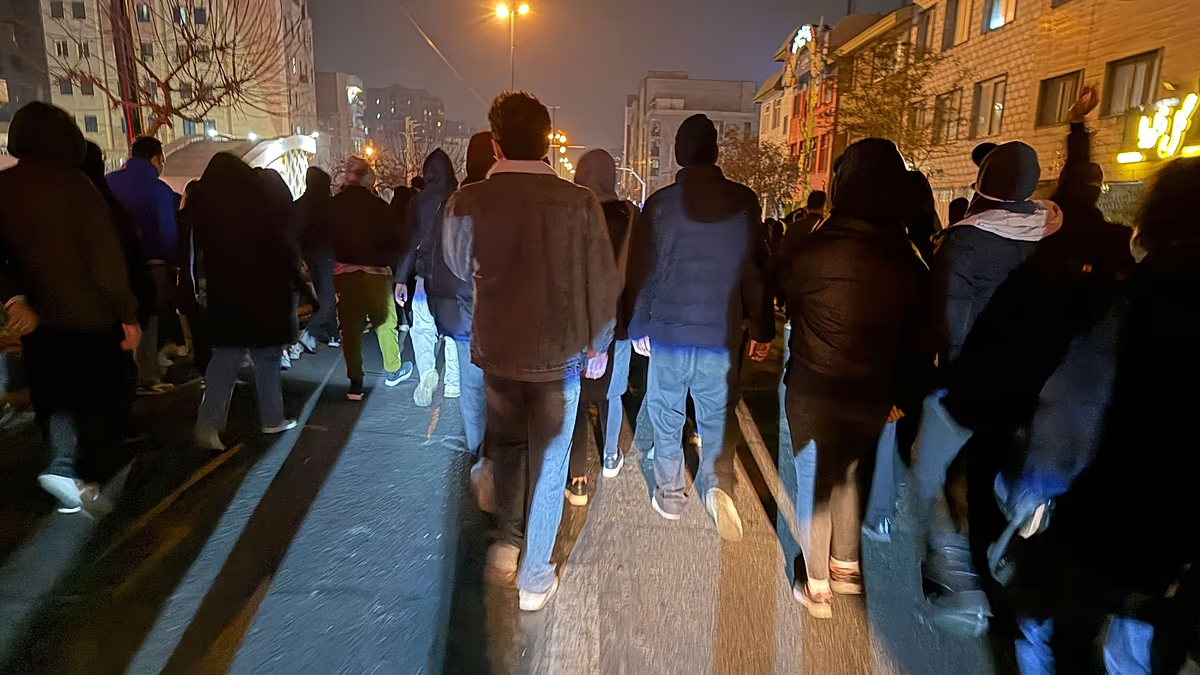
The first of these executions targeted Abbas Akbari Feyzabadi, hanged after being convicted of serious charges including moharebeh—often translated as “enmity against God”—for his alleged role in attacks on a governor’s office in Isfahan province. According to officials, these January 2026 protests were sparked by a devastating economic crisis of hyperinflation and soaring living costs. Authorities claim Feyzabadi opened fire on security forces, with his conviction resting on evidence, images, and confessions ratified by the Supreme Court. Crucially, however, no independent verification exists regarding the fairness of his trial, his access to a robust legal defense, or the conditions under which any confession was obtained. This lack of transparency is a hallmark of such cases, leaving a profound doubt about whether justice was served or if the process itself was a tool of political repression.
Simultaneously, the state executed Mojtaba Kian on charges of espionage for Israel and the United States, allegedly for passing information on defense industries. This execution is particularly notable for its breathtaking speed; arrested following U.S.-Israeli strikes that began a new phase of regional conflict in late February 2026, Kian was put to death less than fifty days later. While espionage in a time of war is treated severely by any nation, human rights observers highlight the absence of due process, with trials often held behind closed doors in Revolutionary Courts. This rapid timeline from arrest to execution suggests a process intended to produce deterrence and spectacle rather than a meticulous, fair examination of the facts, raising urgent questions about the defendant’s rights from the moment of his detention.
In a separate but parallel proceeding, a Tehran court has sentenced four more young men to death, casting a long shadow back to the “Woman, Life, Freedom” protests of 2022. Milad Armoon, Navid Najjaran, Mehdi Imani, and Seyed Mohammadmehdi Hosseini were convicted of efsad-e fel-arz (“corruption on Earth”) for their alleged involvement in the death of Arman Aliverdi, a Basij-affiliated student who was wounded during protests in November 2022 and died days later. The trial, presided over by the infamous Judge Abolqasem Salavati, was reportedly marred by severe procedural irregularities. According to rights groups, the verdicts were delivered verbally to the defendants without their lawyers present, a blatant violation of the right to a defense. Four other co-defendants received lengthy prison and social restrictions. This “Ekbatan Town” case exemplifies how the state continues to relentlessly pursue and punish individuals connected to the 2022 uprising, using the most severe charges available.
The international response has been one of sharp alarm. UN High Commissioner for Human Rights Volker Türk stated that the rights of the Iranian people “are still being harshly and violently stripped away by the authorities.” Organizations like Amnesty International have repeatedly warned that these are “grossly unfair trials,” where confessions are frequently coerced through torture and defendants are denied meaningful access to legal counsel of their choice. These criticisms are flatly rejected by Iranian judicial authorities. Judiciary Chief Gholamhossein Mohseni Ejei defiantly asserted that the state will not hesitate to legally punish those “whose hand is smeared with the blood of our people,” framing the executions as lawful and necessary acts of justice and national defense.
Ultimately, this wave of executions represents more than isolated judicial acts; it is a clear and chilling signal from the Iranian state. It communicates that whether the challenge stems from economic despair, political dissent, or external conflict, the regime will respond with overwhelming and lethal force. By leveraging broad, theologically-framed charges like “enmity against God” and “corruption on Earth,” the judiciary conflates political opposition with existential sin, thereby justifying the ultimate penalty. For the families of the condemned and for a populace weary of repression and economic hardship, these actions deepen a well of grief and fear. They underscore a grim reality: in Iran, the price for protest, real or alleged, continues to be measured in human lives, extracted through a process that the wider world finds deeply unjust and inhumane.